










Sony AI has developed a robot capable of taking on some of the world's finest table tennis players, marking what researchers describe as a "landmark moment" for artificial intelligence.
The machine, named Ace, has beaten elite human opponents in official matches, a feat its creators believe stands alongside historic AI triumphs such as IBM's Deep Blue defeating chess grandmaster Garry Kasparov in 1997 and DeepMind's mastery of Go in 2016.
While AI systems have long dominated board games, the physical demands of fast-paced sports had remained beyond their reach.
Table tennis, with balls travelling above 45 miles per hour and intricate spin patterns, presented an especially formidable challenge.
TRENDING
Stories
Videos
Your Say
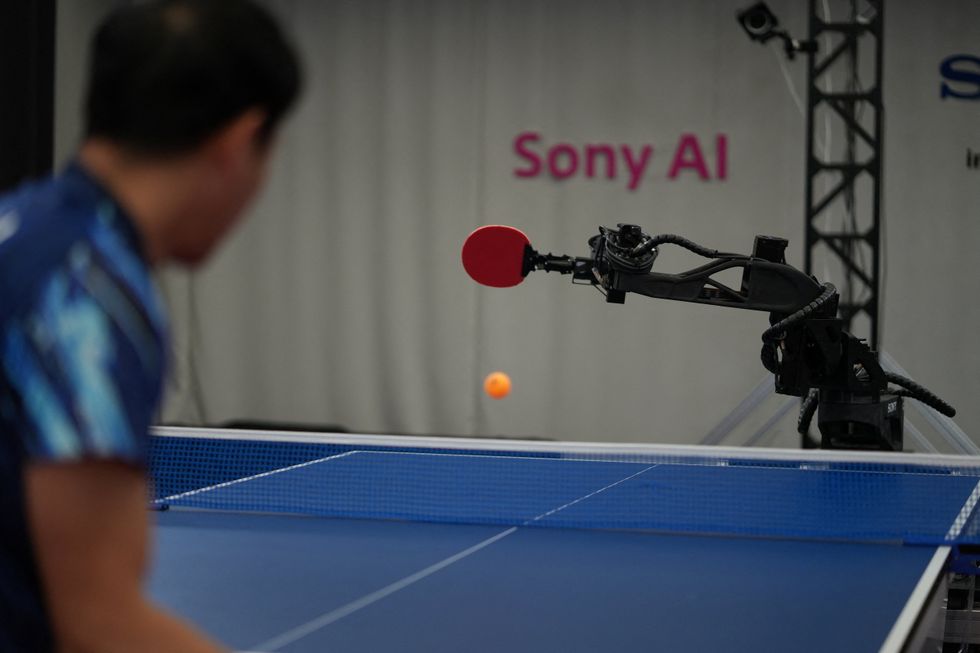
To match the speed of professional play, Ace employs a sophisticated vision system comprising 9 high-speed cameras that monitor the ball's position in 3D.
Three additional event-based sensors concentrate specifically on detecting spin by tracking surface markings such as the manufacturer's logo.
Rather than capturing conventional images, these cameras register minute fluctuations in light as they occur, enabling them to follow the ball at extreme velocities.
This data feeds into a computer trained through thousands of hours of virtual gameplay.
Sony AI has developed a robot capable of taking on some of the world's finest table tennis players
|REUTERS
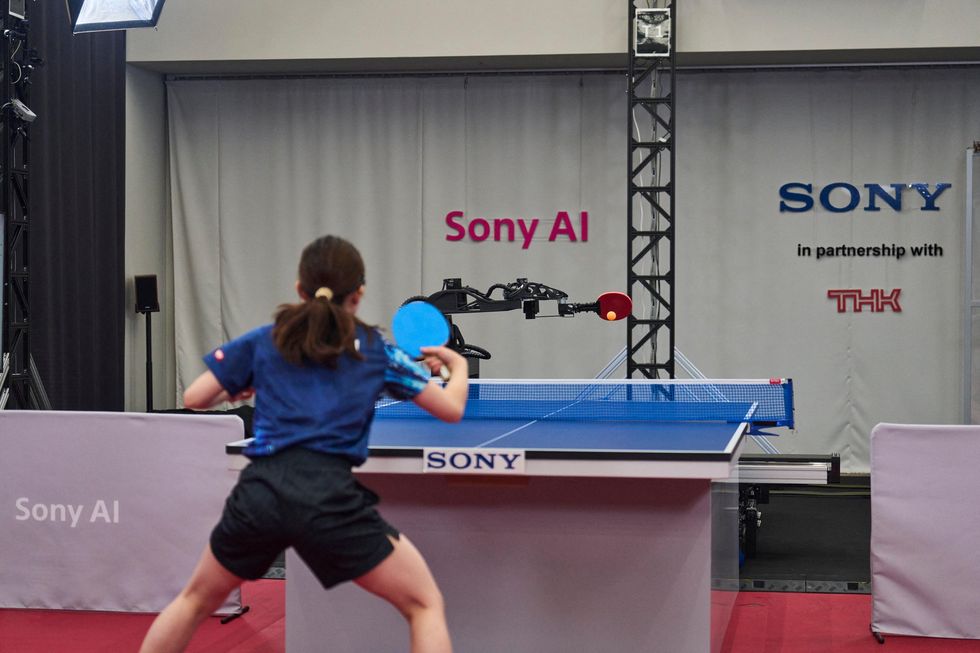
An eight-jointed robotic arm then executes each stroke, replicating human speed and range of motion within a split second.
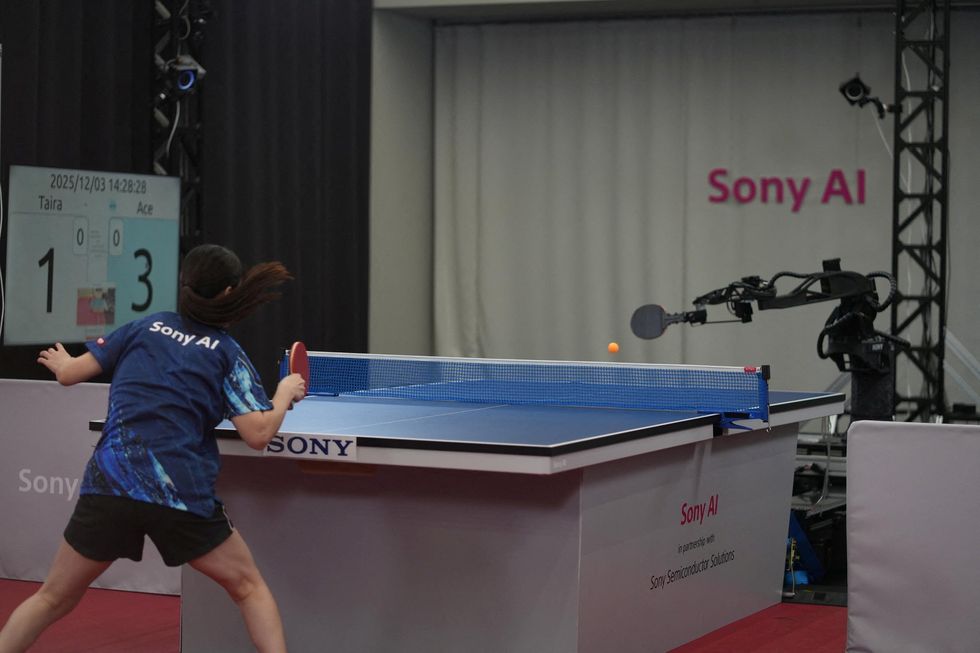
Under official competition rules, Ace emerged victorious against three out of five elite amateur opponents.
The robot successfully returned more than three-quarters of heavily spun shots and demonstrated the ability to adjust when balls took unexpected deflections off the net.
When facing professionals Minami Ando and Kakeru Sone, the machine lost both encounters but claimed one game from seven played.
LATEST DEVELOPMENTS
Researchers describe it as a 'landmark moment' for artificial intelligence
|REUTERS
Rather than relying on superhuman power, Ace's success stemmed from its capacity to produce varied spin types and its remarkable consistency in getting the ball back across the table.
During one rally, it executed a spin shot that human experts had considered physically impossible.
Kinjiro Nakamura, a table tennis specialist who competed at the 1992 Olympics, witnessed Ace intercept a ball early and apply backspin in a manner he had never seen before.
He told the Times: "No one else would have been able to do that."
The machine, named Ace, has beaten elite human opponents in official matches
|REUTERS
Mr Nakamura added: "I didn't think it was possible. But the fact that it was possible means that there is a possibility that a human could do it too."
Peter Stone, chief scientist at Sony AI, emphasised the significance extends far beyond sport.
He said: "This breakthrough is much bigger than table tennis.
"Once AI can operate at an expert human level under these conditions, it opens the door to an entirely new class of real-world applications that were previously out of reach."
Our Standards: The GB News Editorial Charter