










Arsene Wenger's proposed "daylight" offside goal rule has been used for the first time in Canada.
Pacific FC striker Alejandro Diaz etched his name into football history by netting the finish.
It has been permitted under the experimental "daylight" offside interpretation in a senior professional league.
The forward found the net during his side's 2-2 draw with Halifax Wanderers in the Canadian Premier League (CPL), a strike that would have been disallowed under conventional International Football Association Board (Ifab) regulations.
 Diaz, at the far post just on the edge of the six-yard box, scored the 'daylight' offside goal |
 ONESOCCER
TRENDING
Stories
Videos
Your Say
Canada's top division has become the first worldwide first-tier competition to trial this revised offside approach, following earlier small-scale experiments in Italian under-18 football and Dutch youth tournaments.
The CPL, which operates without video assistant referee technology, is conducting the trial in partnership with Fifa as part of broader efforts to assess potential modifications to the game's laws.
The daylight interpretation fundamentally alters how offside is judged by requiring a visible gap between an attacking player and the second-to-last opponent, typically the final defender, given standard goalkeeper positioning.
Under this framework, as Wenger has explained, "any part of your body is on the same line as the defender, you're not offside".

Arsene Wenger has backed the ruling
|REUTERS
LATEST SPORTS NEWS
It represents a significant departure from existing rules, where even the slightest overlap between attacker and defender can result in a flag being raised.
The trial aims to cut down on tight offside calls whilst promoting more adventurous attacking football.
Wenger has championed this offside revision since taking up his position as Fifa's chief of global football development in November 2019, with promoting attacking play forming a central part of his brief.
The former Arsenal manager unveiled his vision for visual separation between players within weeks of his appointment, proposing what has become commonly known as the daylight rule.
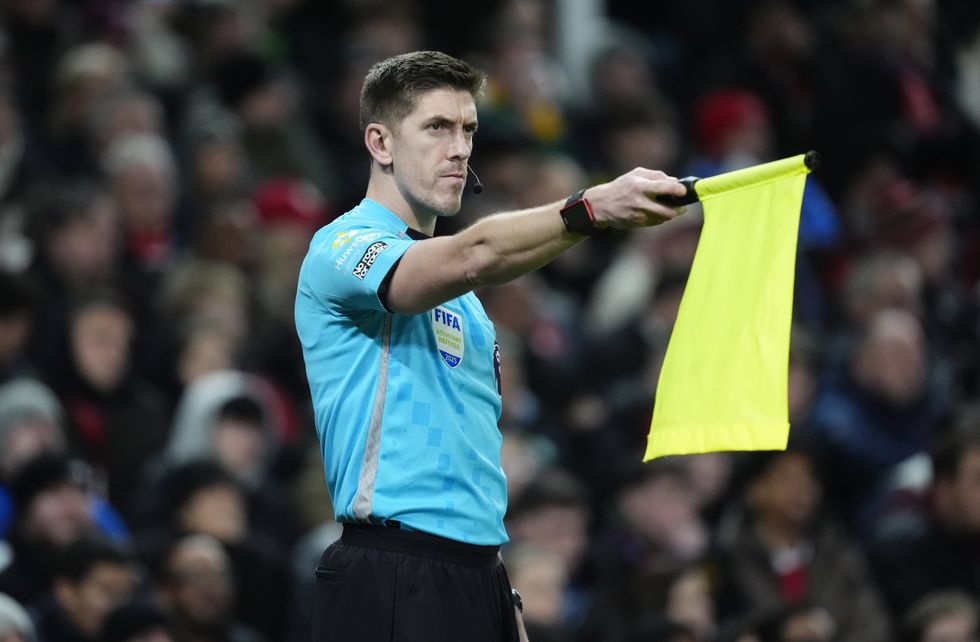
The trial aims to cut down on tight offside calls
| PAHis advocacy stems from concerns about controversial VAR decisions that have ruled out goals by microscopic margins, with technology enabling millimetre-precise judgements that many feel contradict the spirit of the game.
The offside law has undergone only two substantial revisions since football's rules were first codified in 1863, with changes made in 1925 and 1990, reflecting its fundamental importance to tactical systems.
Critics have raised concerns that the daylight interpretation tips the balance too heavily in favour of attacking players, potentially undermining the contest between forwards and defenders.
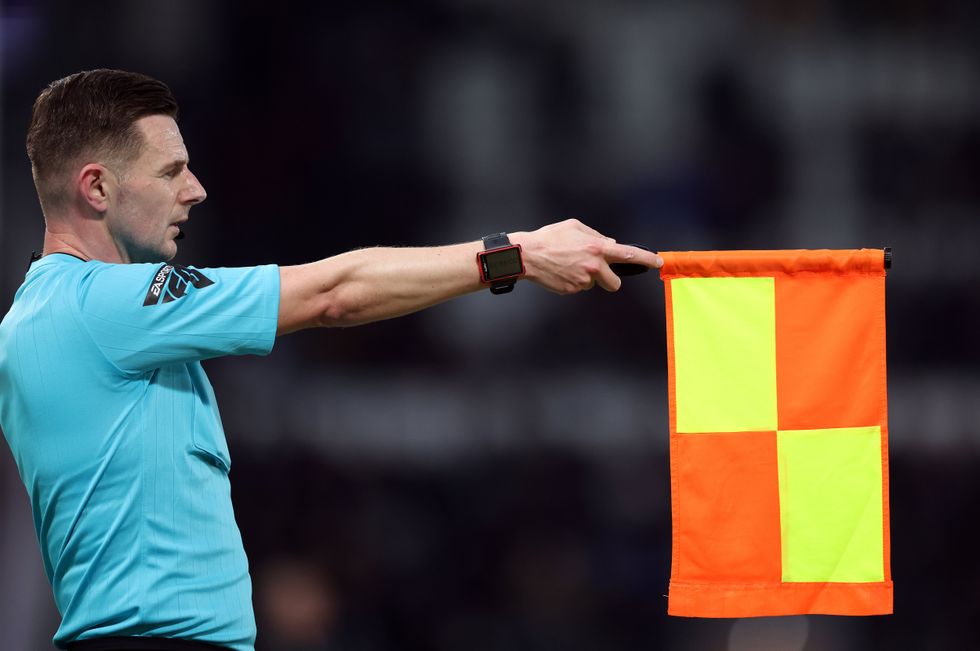
The offside law has undergone only two substantial revisions since football's rules were first codified in 1863
|PA
Previous experiments at lower levels produced largely encouraging outcomes, though reservations emerged about the advantage afforded to attackers.
Findings from trials will be submitted to Ifab at the conclusion of the current season, with the governing body set to evaluate whether the concept merits wider adoption.
Should the trial prove successful, the revised offside law could potentially be introduced across global football in time for the 2027-28 European campaign.
Our Standards: The GB News Editorial Charter