








The UK Space Agency has set a date for a for British-made rover to land on Mars in search of life on Red Planet.
The Rosalind Franklin rover was initially scheduled to land on Mars in 2023 as part of a European Space Agency (ESA) mission.
The rocket-powered system designed to ferry the rover to Mars' surface had been being built by Russia's space agency Roscosmos - but was cancelled by the ESA following the invasion of Ukraine in 2022.
The UK Space Agency went onto award a contract to Airbus to build a replacement landing system for the rover at a site in Stevenage, Hertfordshire.
The project has received expertise from scientists at host of British institutions - including the universities of Aberystwyth, Bradford, UCL, Leicester - and RAL Space and Teledyne E2v.
And now, the agency has finally set a date for the heavily delayed mission - 2028 - after Nasa gave it the green light.
The US agency said it had selected SpaceX's Falcon Heavy rocket to launch the mission from the Kennedy Space Center in Florida - the same place from which Artemis II blasted off just weeks ago.
"The mission is targeting opportunities to launch no earlier than late 2028," Nasa confirmed - and it will arrive on the Red Planet in 2030.
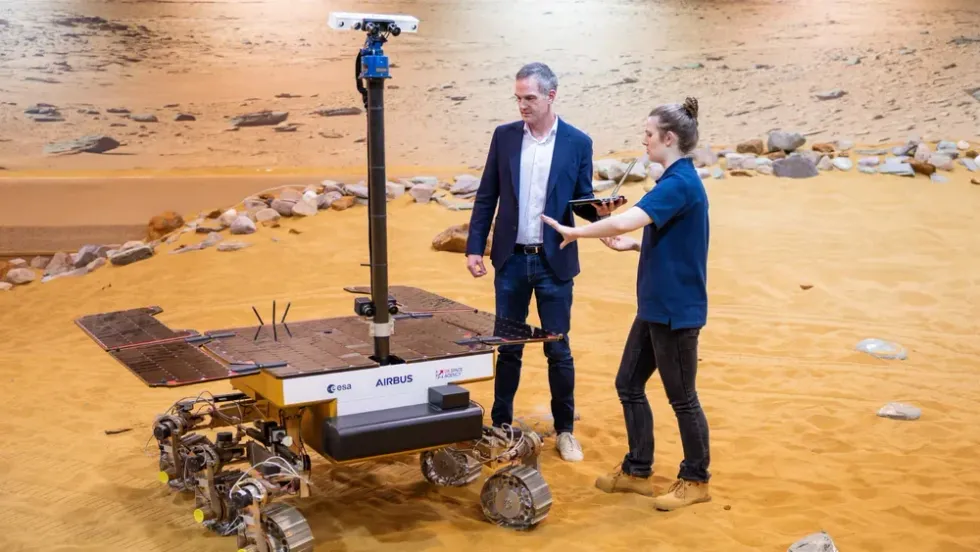
The Rosalind Franklin rover was initially scheduled to land on Mars in 2023
|DSIT
The highly anticipated venture will see the rover scouring the surface of the Red Planet for signs of life.
Former Science Secretary Peter Kyle previously said the rover "could unlock some of the key questions that humanity is asking of itself".
The Rosalind rover has had a troubled history - with early plans for launch dating as far back as 2018.
Nasa will supply the launcher for the rover, as well as a number of other elements including its radioisotope heater units.
SPACE - READ THE LATEST:

The highly anticipated venture will see the rover scouring the surface of the Red Planet for signs of life
| NASAThe financial shortfall had to be picked up by ESA member states, before the pandemic forced the completion of the rover to be pushed back.
The mission was then essentially grounded when Russia was removed from the project following its Ukraine invasion.
Airbus was then contracted to build the lander as well as the rover.
In addition to looking for signs of life, scientists are hopeful the British-built rover will lay the foundations for human exploration beyond low Earth orbit.
It will be equipped with drilling technology - capable of penetrating two metres into Martian soil - which may uncover molecules hidden below the surface of Earth's neighbouring planet.
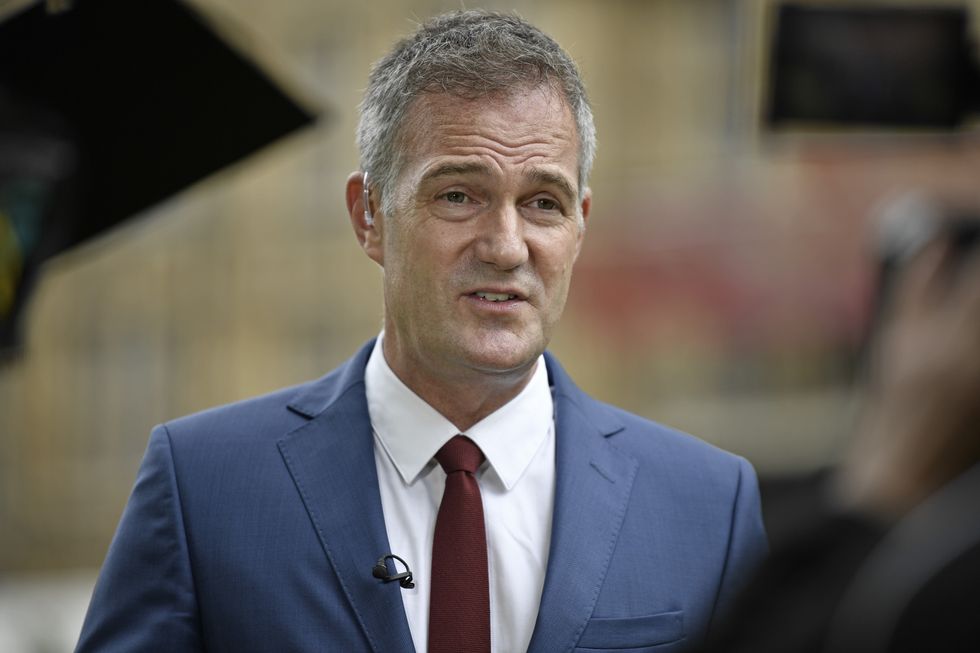
Peter Kyle said the heavily delayed mission may 'unlock some of the key questions that humanity is asking of itself'
| PAThe vehicle will be powered by electricity generated from its solar arrays.
It has been designed with software which will enable it to have autonomy over it's decision-making while on Mars, using optical sensors to navigate the harsh surface.
The orbiter will then relay data from the rover back to Earth for researchers to examine.
Chris Draper, the head of Mars programmes at Airbus, said: "Before we were building our rover and had to rely on others to get it down safely.
"Whereas now we're playing a big part in that lander platform."
Our Standards: The GB News Editorial Charter