










Scientists have identified traces of food DNA on the Shroud of Turin, a discovery that points to possible contamination of the ancient burial cloth.
The relic is widely believed to have wrapped the body of Jesus Christ.
An international team of researchers examined samples collected from the shroud in 1978.
Their findings appeared in a preprint study published on bioRxiv in March.
Rather than finding visible food remnants, the scientists detected plant material by sequencing microscopic fragments of DNA extracted from dust and fibres on the sacred cloth.
The results suggest the shroud has been exposed to various biological materials throughout its history.
Carrot DNA emerged as the dominant plant "signal", representing approximately 30.9 per cent of all identified plant sequences.
The genetic material more closely resembled cultivated carrot varieties than wild specimens.
Bread wheat accounted for roughly 11.6 per cent of the plant DNA detected.
The analysis also revealed traces of durum wheat, einkorn wheat, maize and rye among the cereal crops present.

Scientists have identified traces of food DNA on the famous Shroud of Turin
| GETTYHorticultural species identified included peppers, tomatoes and potatoes from the Solanaceae family, alongside melons or cucumbers from the Cucurbitaceae group.
Peanuts showed a strong presence in the samples.
Weaker signals came from perennial ryegrass, bluegrass, fescue, oats and clovers.
Several of the species detected originated in the Americas, including tomatoes, maize and peanuts.
SCIENCE MYSTERIES - READ MORE:
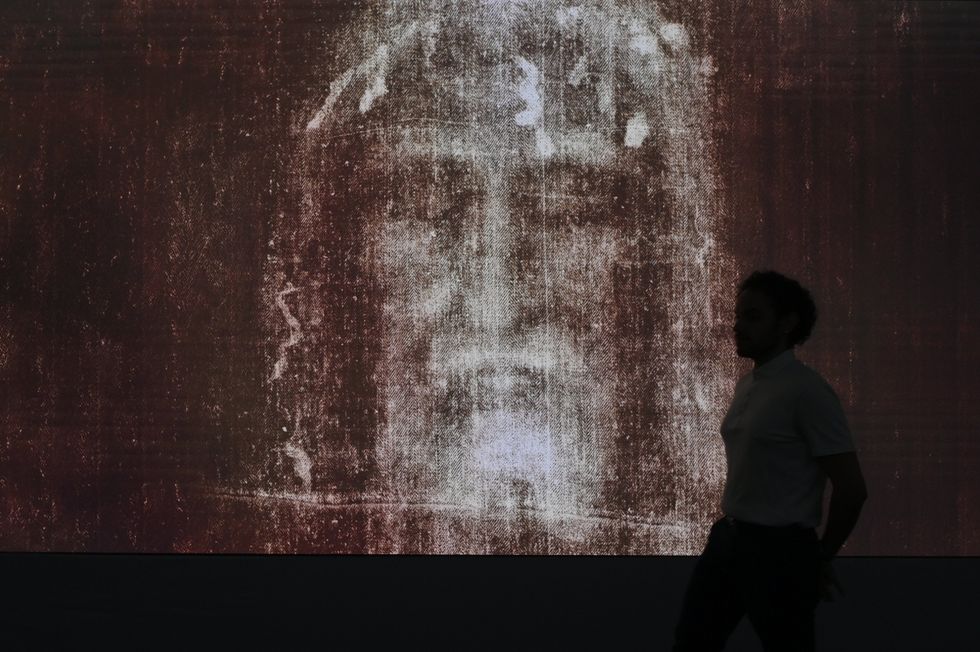 While not displayed in person, the Shroud of Turin was displayed digitally in 2025, seen here | GETTY
Their presence strongly suggests contamination occurred sometime after 1492 - when these crops first reached Europe in what's known as the Columbian Exchange.
That could deal a hammer blow to worshippers who believe the Shroud is real.
But researchers concluded genetic profiling alone cannot establish when the relic was created.
"The Shroud's age cannot be determined through metagenomics because this methodology is unable to provide any robust evidence supporting either a medieval origin or a history dating back two millennia," the study said.
However, the team noted their work offers valuable insights into how the relic has been preserved and handled over the centuries.
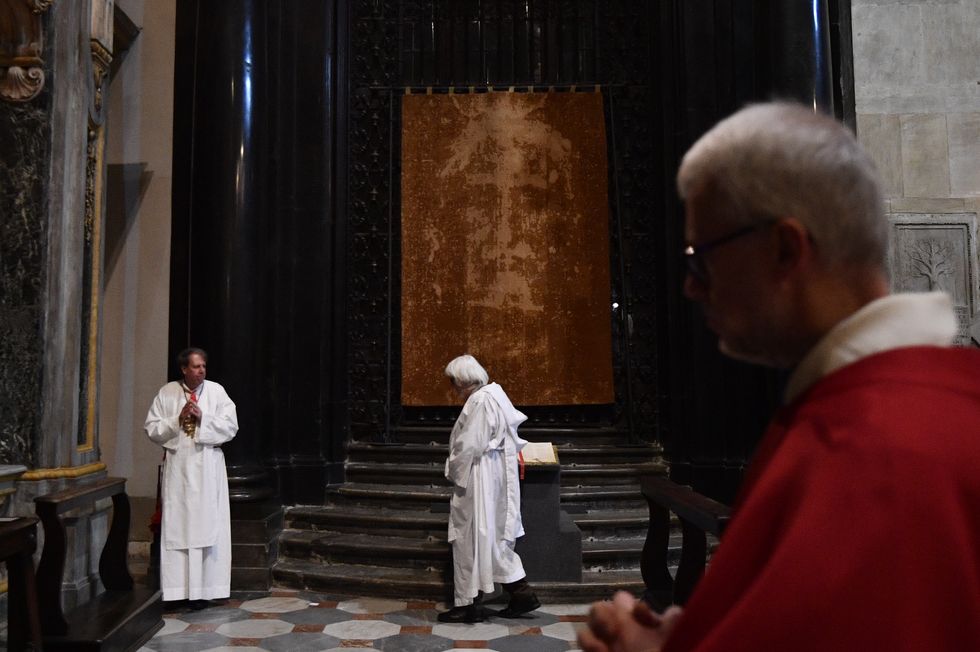
The shroud has been housed in Turin, Italy since 1578
|GETTY
The shroud has been housed in Turin, Italy since 1578, though its documented history only extends back to the mid-14th century.
Radiocarbon dating carried out in 1988 placed the cloth's origin between 1260 and 1390 AD, suggesting a medieval creation.
Yet a 2024 analysis by Italy's Institute of Crystallography offered contrasting results.
Using wide-angle X-ray scattering techniques, the institute found evidence consistent with the shroud being approximately 2,000 years old.
This dating would align with Christian tradition regarding the burial of Jesus.
Researchers declined to comment further on their findings - with their final results still yet to be published.