










A perplexing deep-sea enigma that captivated the public and fuelled wild theories about extraterrestrial origins has finally been cracked after more than two years of painstaking scientific work.
The mysterious "golden orb" retrieved from the depths of the Gulf of Alaska in 2023 has been identified as the remains of a rare giant deep-sea anemone known as Relicanthus daphneae.
Researchers from the National Oceanic and Atmospheric Administration and the Smithsonian Institution announced the peculiar golden mass was actually dead tissue from the base of the creature, the portion that once anchored it to the rocky seabed.
The four-inch-wide object, featuring a distinctive hole and mound-like shape, was discovered at a depth of 3,250 metres during an expedition aboard the NOAA Ship Okeanos Explorer.
TRENDING
Stories
Videos
Your Say
When the remotely operated vehicle Deep Discoverer first spotted the strange golden structure clinging to a rock, the team operating the robotic submarine from the surface was utterly baffled.
"I just hope when we poke it, something doesn't decide to come out. It's like the beginning of a horror movie," one expedition member remarked at the time.
The unusual find sparked intense speculation both online and within scientific circles, with theories ranging from alien eggs to an undiscovered species or even remnants of a dead sponge.
Scientists themselves were uncertain whether something had crawled into the object or emerged from it.
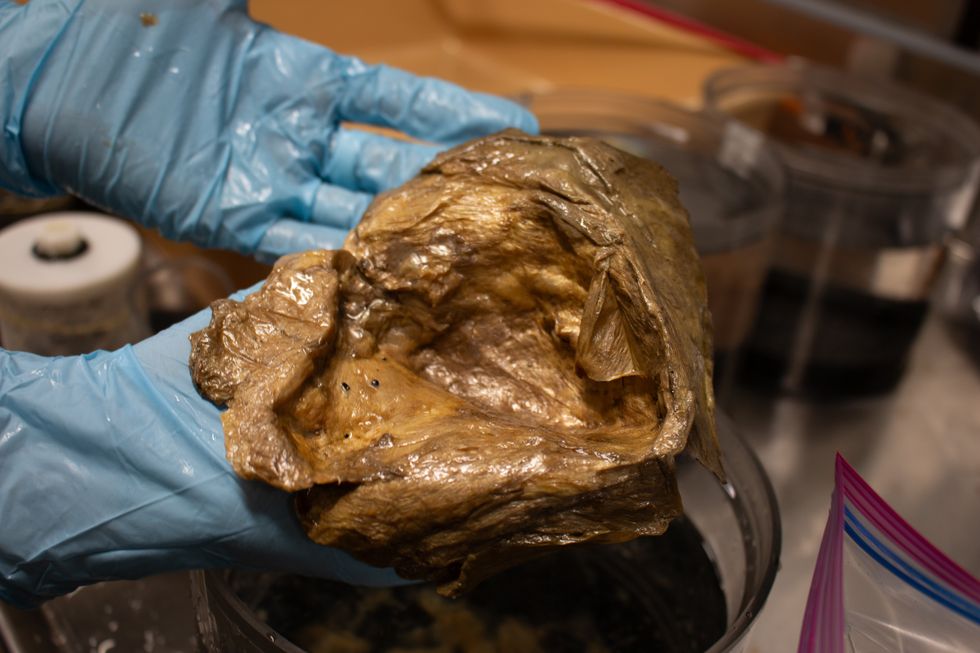
The mystery of the 'golden egg' captivated scientists across the world
|NOAA
A robotic vacuum arm collected the specimen and transported it back to the ship, from where it was dispatched to the Smithsonian National Museum of Natural History for detailed examination.
Despite initial hopes standard laboratory procedures would quickly solve the puzzle, the golden orb proved remarkably stubborn.
Dr Allen Collins, zoologist and director of NOAA Fisheries' National Systematics Laboratory, explained: "We work on hundreds of different samples and I suspected that our routine processes would clarify the mystery. But this turned into a special case that required focused efforts and expertise of several different individuals."
He added: "This was a complex mystery that required morphological, genetic, deep-sea and bioinformatics expertise to solve."
LATEST DEVELOPMENTS
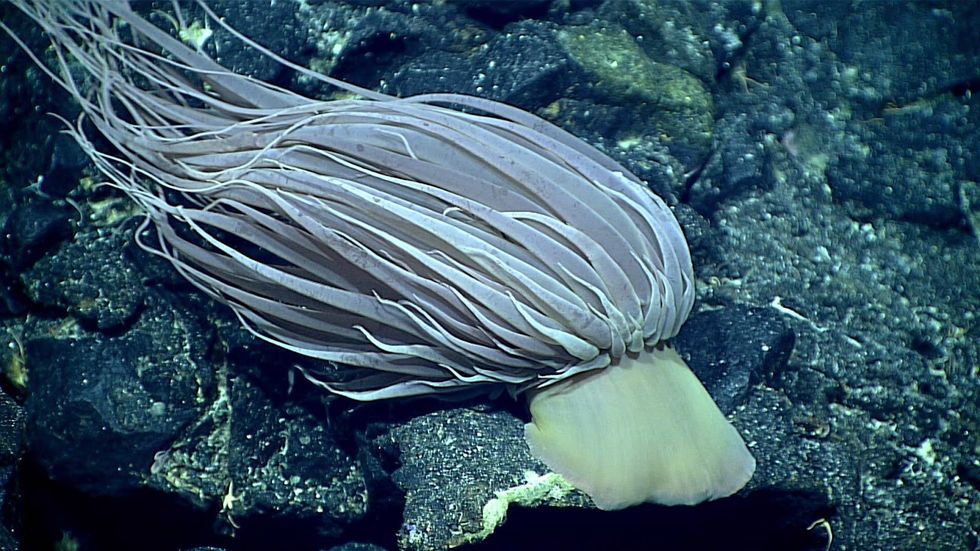
This deep-sea anemone, Relicanthus daphneae, which was observed during a 2016 expedition
|NOAA
Physical examination revealed the object lacked typical animal anatomy but consisted of fibrous layers densely packed with stinging cells, suggesting a connection to cnidarians such as corals and anemones.
Initial DNA barcoding proved inconclusive, likely contaminated by microscopic organisms living on the specimen.
Scientists then employed whole-genome sequencing, which confirmed the genetic material was almost identical to a known Relicanthus daphneae reference genome.
The golden base structure is typically concealed beneath the anemone's body, but this particular specimen appears to have been abandoned.
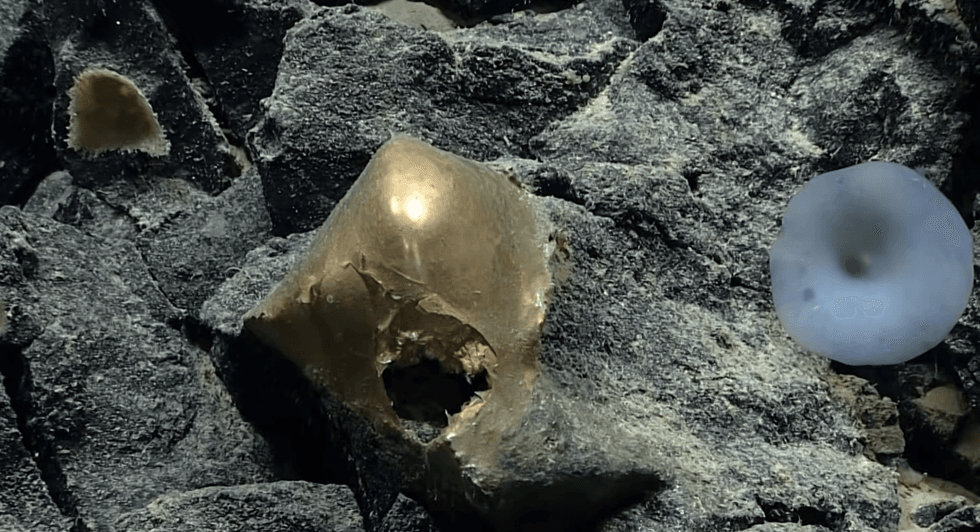
The 'golden egg' was first discovered in 2016
|NOAA
NOAA remains uncertain about the fate of the upper portion of the creature, suggesting it may have perished or perhaps relocated to a different spot on the ocean floor.
"We might never know for sure," the agency stated in a video detailing the findings.
The full anemone possesses a pink cylindrical body capable of growing up to three feet across, with tentacles extending as long as six feet.
Captain William Mowitt, acting director of NOAA Ocean Exploration, reflected on the significance of the discovery:
He said: "So often in deep ocean exploration, we find these captivating mysteries, like the 'golden orb'.
"With advanced techniques like DNA sequencing, we are able to solve more and more of them.
"This is why we keep exploring—to unlock the secrets of the deep."
Our Standards: The GB News Editorial Charter