







American scientists have announced plans to resurrect an extinct antelope species using Jurassic Park technology.
Dallas-based Colossal Biosciences has revealed the bluebuck, which vanished more than two centuries ago, will become the sixth creature in its de-extinction programme.
The company is already working to revive three other mammals: the woolly mammoth, the dire wolf and the thylacine, commonly known as the Tasmanian tiger.
Two extinct birds, the dodo and the moa, complete the portfolio.
The bluebuck project has been underway for two years, with several of the first steps already completed.
With its distinct backward-curving black horns marked with rings, bluebucks once roamed the coastal grasslands of South Africa's southwestern Cape region.
European settlers particularly prized the svelte animal for its distinctive silvery slate-blue hide, with the species standing at around four feet tall at the shoulder.
The bluebuck was smaller than its close relatives, the roan and sable antelopes.
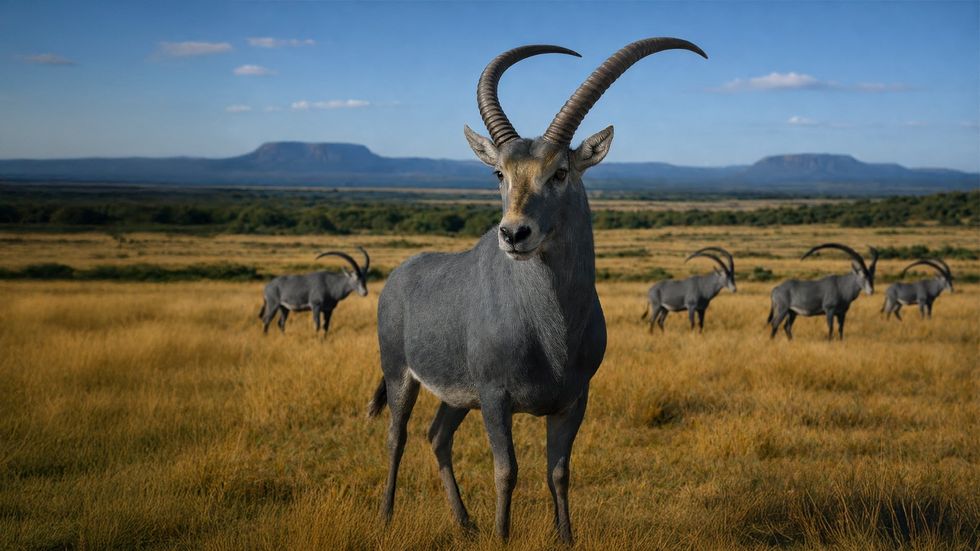
The company is working to revive three other mammals: the woolly mammoth, the dire wolf and the Tasmanian tiger
|REUTERS
Hunters drove the species to extinction around 1800, just 34 years after scientists first documented it.
"Humans did this. European settlers shot the bluebuck out of the Cape in under 34 years. There's no ambiguity about the cause and there's no ambiguity about the responsibility," Colossal's CEO Ben Lamm said.
Colossal has deployed genetic engineering techniques on the roan antelope, the bluebuck's closest living relative.
The two species share more than 98 per cent of their genetic makeup.
LATEST SCIENCE BREAKTHROUGHS:
Scientists obtained bluebuck DNA primarily from a mounted skin specimen of a young male held at the Swedish Museum of Natural History in Stockholm.
The team has now entered the genome-editing phase, introducing key bluebuck traits into roan antelope cells.
Researchers have also created pluripotent stem cells in roan antelope, which can develop into many different cell types.
Once editing is complete, the modified cells will be used to create an embryo for implantation into a surrogate roan mother. Gestation would take approximately nine months.
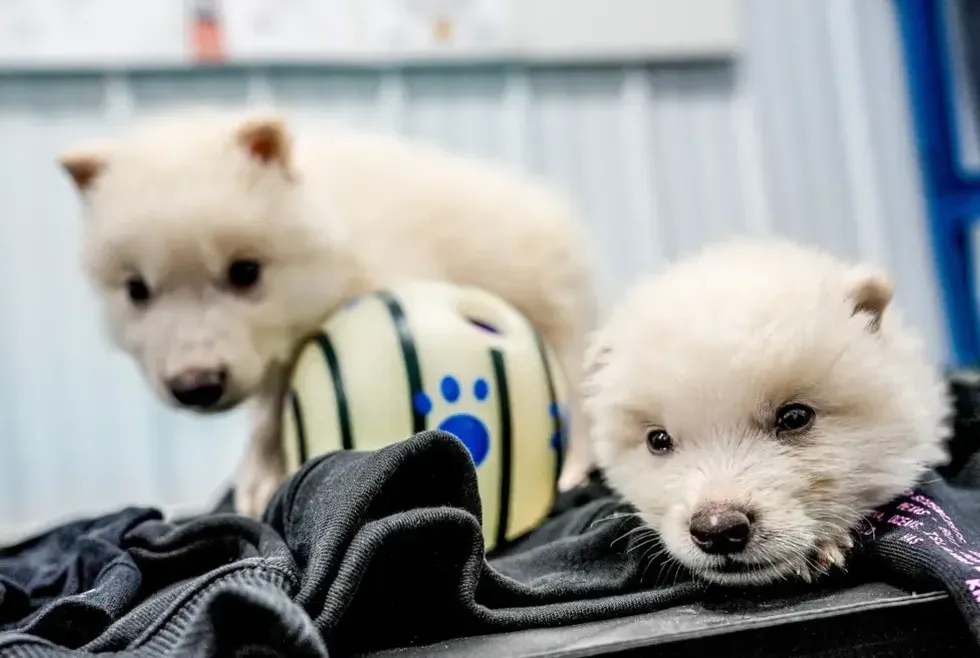
Colossal Sciences' first dire wolf pups were born last April
|COLOSSAL SCIENCES
"If we have the capability to right that wrong, I think we have an obligation to," Mr Lamm said.
"Conservation as currently practiced is not winning. We are losing species faster than our existing toolkit can address," he added.
The company's dire wolf project has already produced results, with three genetically engineered wolf pups born in April 2025.
The animals now live on an 810-hectare ecological preserve in a semi-wild habitat.
Colossal expects more dire wolf pups by year's end, alongside progress announcements on the mammoth, dodo, thylacine and moa projects.