










A diver’s discovery off the coast of Japan has sparked a decades-long dispute over what some believe could be Asia’s answer to Atlantis.
Diving instructor Kihachiro Aratake first stumbled upon the mysterious underwater structure near Yonaguni island while searching for new dive sites 40 years ago.
“Back in those days the sea was so very clear,” he told The Times.
“And looking down I felt I was looking down on Machu Picchu.”
TRENDING
Stories
Videos
Your Say
The vast formation - now known as the Yonaguni Monument - features strikingly straight edges, terraces, steps and tunnel-like structures stretching across hundreds of yards.
Some experts believe it could be the remains of a long-lost civilisation.
Professor Masaaki Kimura, a geologist at the University of the Ryukyus, argued the site may be “a probable, ancient, megalithic civilisation… an ancient city beneath the sea”, dating back around 10,000 years.
He claimed the structure resembles a pyramid-like temple complex, complete with roads, smaller buildings and even a stadium.
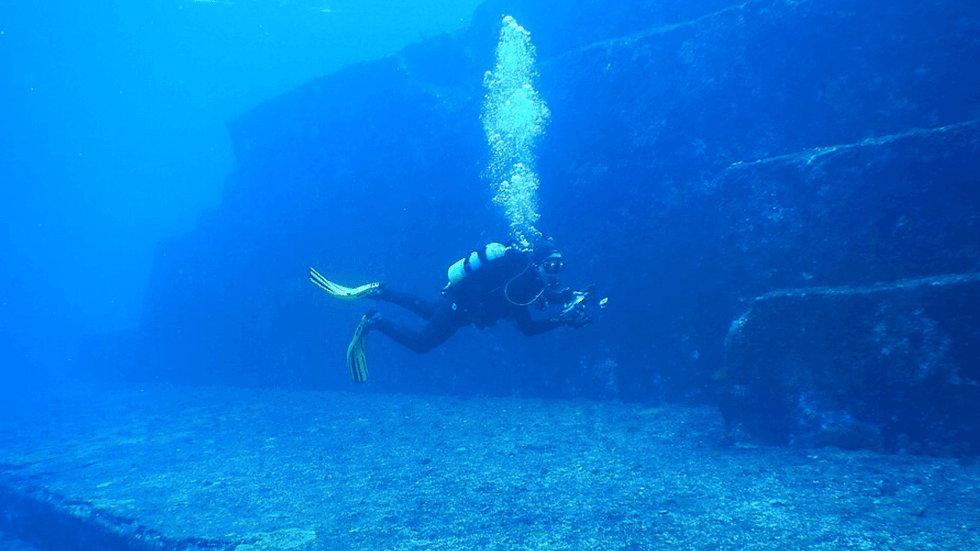
The vast formation features strikingly straight edges, terraces, steps and tunnel-like structures
|WIKIMEDIA COMMONS
Prof Kimura also reported finding stone tools and carvings, including what he believed to be a depiction of a wild boar.
His work linked the monument to the mythical lost continent of Mu - often described as a Pacific counterpart to Atlantis, though dismissed by mainstream archaeologists.
However, other scientists strongly dispute those claims.
Geologist Robert Schoch, who investigated the site, concluded the structure is entirely natural, formed from sandstone bedrock shaped by seismic activity and erosion.
ARCHAEOLOGY - READ THE LATEST:
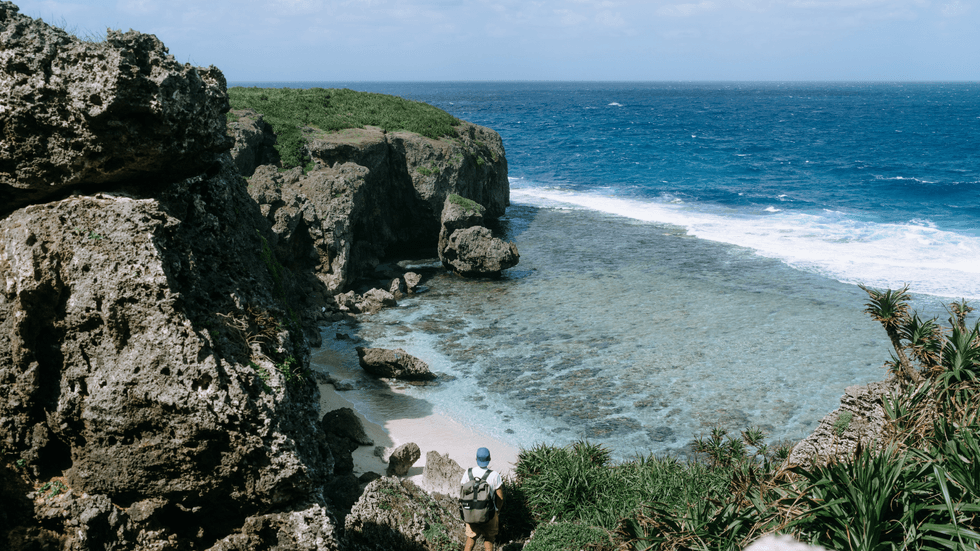
Kihachiro Aratake first stumbled upon the mysterious underwater structure near Yonaguni island
|GETTY
He said the rock naturally fractures into straight lines, creating the illusion of man-made design.
While not ruling out minor human modification, Mr Schoch said he “became convinced that the Yonaguni Monument is primarily the result of natural geological and geomorphological processes at work”.
Despite the scientific divide, the site has become a major tourist attraction.
Now 78, Mr Aratake still runs his diving business, guiding visitors to the underwater formation he first discovered.
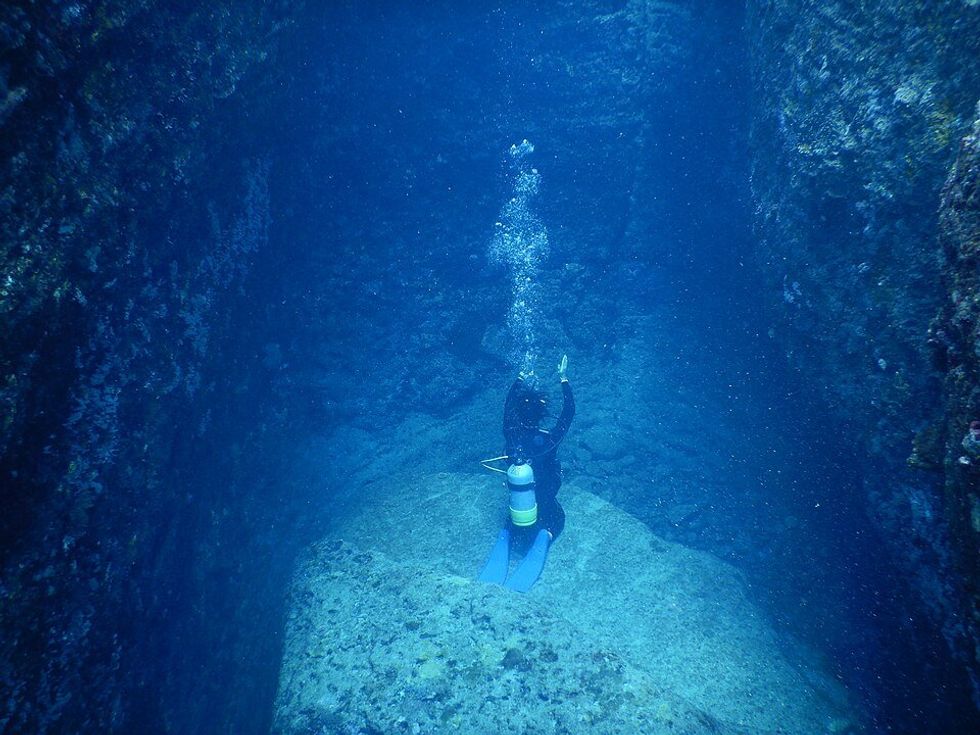
Despite the scientific divide, the site has become a major tourist attraction
|WIKIMEDIA COMMONS
Tourists continue to flock to the site - drawn by the mystery of whether it is a lost city beneath the sea or simply an extraordinary natural formation.
“I don’t think it will ever be resolved and I quite like it when they argue," Mr Aratake said.
The original story of the Lost City of Atlantis was first theorised by the Ancient Greek philosopher Plato, who wrote in his dialogues Timaeus and Critias that it existed 9,000 years before his time.
He claimed the lost civilisation that once lived there possessed abundant natural resources, exotic wildlife and a precious metal known as orichalcum.
Our Standards: The GB News Editorial Charter