










Researchers have uncovered traces of alien space matter within an ancient impact site in South Korea, a discovery that could fundamentally alter our understanding of how life began on Earth.
The team examined the Hapcheon crater, the sole verified asteroid-strike site on the Korean Peninsula, where they identified stromatolites bearing extraterrestrial signatures.
These distinctive layered rock formations, created by microbial activity, rank among the earliest known indicators of life on our planet.
According to the scientists, these structures developed in a warm, mineral-rich lake that formed after a massive asteroid collision approximately 42,300 years ago.
Geochemical analysis confirmed the presence of space-derived material embedded within the formations.
The study's lead author, Dr Jaesoo Lim, described the significance of the findings to the Mail: "This is the first comprehensive evidence suggesting that stromatolites could form in hydrothermal lakes created by asteroid impacts.
"Such environments may have provided favourable conditions for early microbial ecosystems."
Speaking to Science News, Dr Lim outlined how geochemical examination of the stromatolites revealed distinctive characteristics.
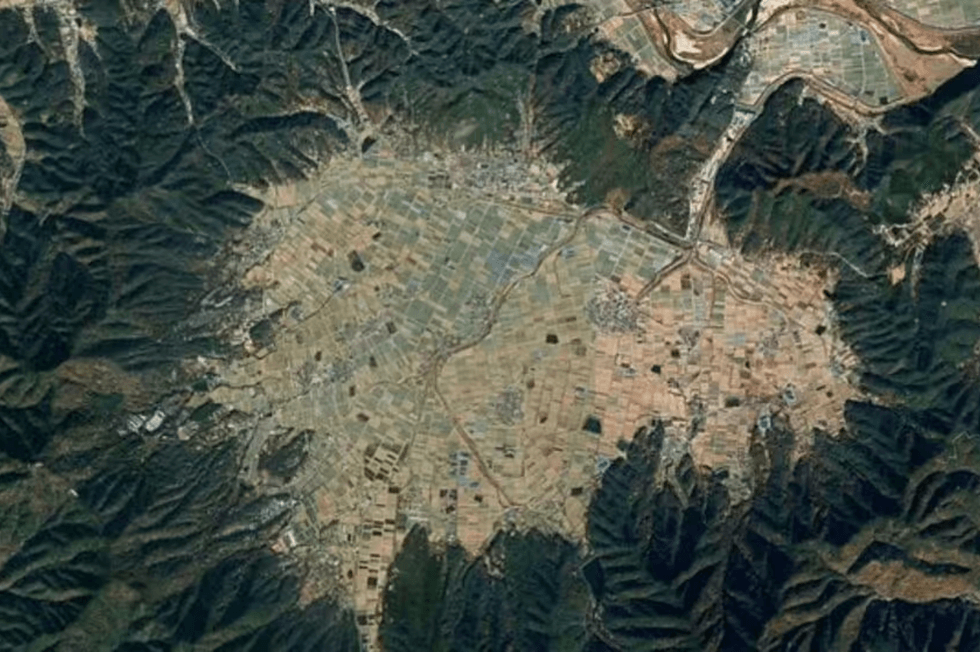
Researchers have uncovered traces of space matter within an ancient impact site in South Korea
|The analysis detected signatures from both the asteroid material and the surrounding bedrock.
Evidence that high-temperature water had altered the formations was also present.
The research team suggests these crater environments may have functioned as natural incubators for primitive life forms.
The findings also shed new light on the Great Oxidation Event, a transformative period roughly 2.4 billion years ago when atmospheric oxygen levels surged dramatically.
LATEST SPACE NEWS:
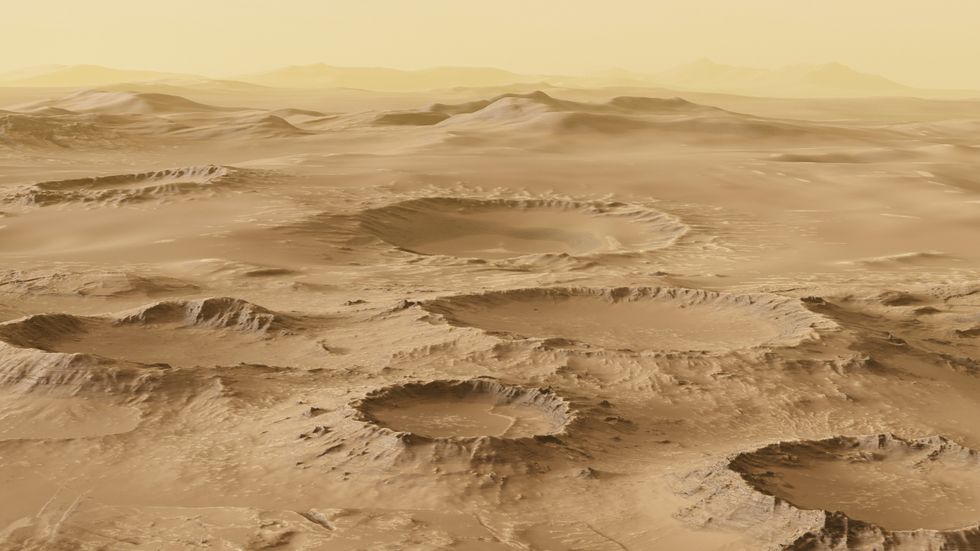
Scientists believe early Mars likely contained impact craters filled with water
|GETTY
Dr Lim explained: "Impact-generated, hydrothermal lakes could have served as localised habitats where oxygen-producing microbes could thrive.
"These environments may have formed what the team describes as oxygen oases."
The research proposes that lakes formed by asteroid strikes could have created isolated pockets where oxygen-producing microorganisms flourished.
This could have potentially contributed to the broader atmospheric changes that reshaped Earth's early environment.
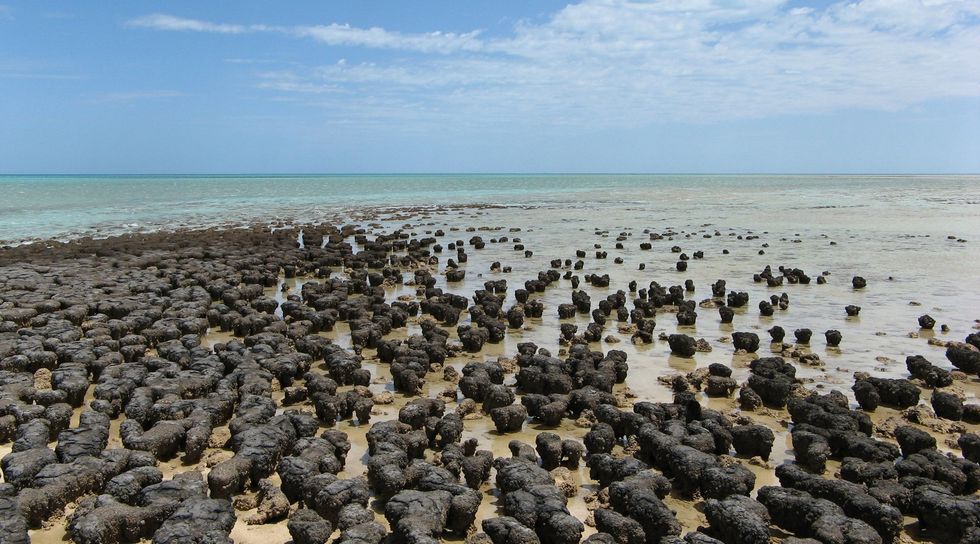
The team examined the Hapcheon crater, where they identified stromatolites bearing extraterrestrial signatures
|GETTY
Beyond its implications for understanding terrestrial life, the study opens intriguing possibilities for the search for extraterrestrial organisms.
Scientists believe early Mars likely contained impact craters filled with water, creating conditions potentially similar to those found at Hapcheon.
This parallel suggests that Martian crater sites could represent prime locations for detecting evidence of ancient microbial life.
The research indicates that future missions to the red planet might benefit from targeting these impact environments, where hydrothermal activity could have fostered conditions suitable for primitive organisms billions of years ago.