








As more information emerges regarding the Sudanese national suspected of carrying out a horrific knife-related attack in Belfast, where the victim Stephen Ogilvie lost his left eye, the UK’s lax asylum system and border-security arrangements are once again coming under intense scrutiny.
It has been reported the Sudanese suspect, Hadi Alodid, had travelled from Paris to Dublin (under the European Union’s freedom of movement principle) before taking a bus into Northern Ireland, with this journey from the Republic being a relatively easy one due to the Common Travel Area (CTA) settlement.
With Alodid arriving in Northern Ireland in 2023, he subsequently submitted an asylum claim and was granted refugee status the very same year, being given leave to remain for a period of five years (until 2028).
If true, this would have been an extremely swift process from entering Northern Ireland after travelling from the Republic and then being granted refugee status.
It is believed that Alodid’s claim may have been handled under a "fast-track" scheme set up under former prime minister Rishi Sunak, who had pledged to tackle the "legacy backlog".
This could have involved the granting of refugee status under a streamlined procedure, which involved the asylum claimant doing a short ten-page questionnaire with no face-to-face interview.
Indeed, the UK Home Office – under Mr Sunak’s premiership – issued a celebratory post over meeting its “legacy backlog target” and clearing 112,000 asylum cases in 2023 (the year Alodid was granted refugee status).
In an unquestionably boastful manner, the Home Office at the time declared “fundamental changes to the decision-making process and boosting efficiency have resulted in 112,000 asylum decisions this year and the highest annual number of substantive decisions in a year since 2002”.
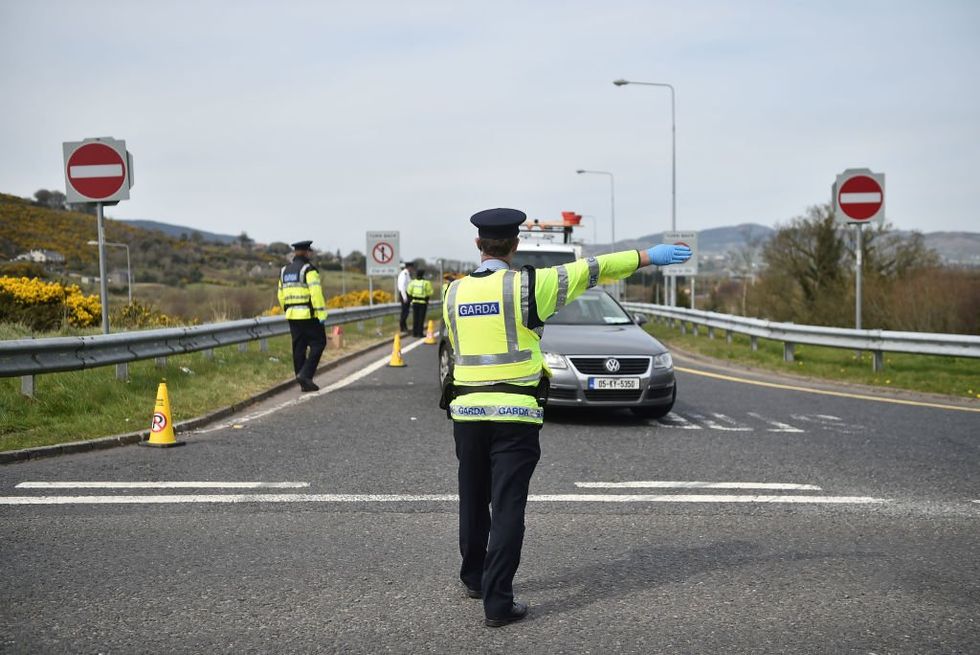
'The UK’s lax asylum system and border-security arrangements are once again coming under intense scrutiny'
|GETTY
The post also stated in just one four-week period between November 20 and December 17, 2023, 20,481 initial asylum decisions were made.
All of this gives rise to an obvious question: has the British political establishment prioritised clearing the asylum backlog by streamlining processes in a way which has relegated the importance of security-based considerations?
Is it acceptable for the Home Office to "fast-track" asylum claims without holding a face-to-face interview with an individual from a conflict-affected part of the world?
One could be forgiven for asking whether the previous Conservative government, angling for favourable media headlines over clearing legacy backlogs and issuing a huge number of asylum-claim decisions in a short period, may have undermined the security-vetting element of such procedures – and, if so, potentially put law-abiding British citizens at risk in their own established local communities.
LATEST DEVELOPMENTS

'The UK Home Office – under Rishi Sunak’s premiership – issued a celebratory post over meeting its 'legacy backlog target'
| PAAlodid's case must now progress through the courts without prejudicial speculation.
But whatever the outcome, it is undeniable recent events have prompted important debate over the UK’s immigration and asylum policy.
If found to be deficient, the UK must strengthen its border security and radically reform its asylum system in a way that places domestic collective security at the heart of it.
Even if it means the UK walking away from international human rights conventions and multilateral treaties to which it has been signed up to for a long time.
Our Standards: The GB News Editorial Charter