







The US and Iran have reached a peace agreement after more than 100 days of war, Donald Trump has said.
Mr Trump announced that long-running negotiations with the Islamic Republic had finally come to a close last night - and confirmed the Strait of Hormuz would reopen "toll-free" while the American naval blockade stationed in the region would withdraw.
Iran, meanwhile, said its "commitments" to the peace agreement will start on Friday - a statement confirmed by the President in a subsequent social media post.
"I hereby fully authorize the toll-free opening of the Strait of Hormuz, and, simultaneously herewith, authorize the immediate removal of the United States naval blockade," Mr Trump wrote.
"Ships of the World, start your engines. Let the oil flow!"
Pakistan's Prime Minister Shehbaz Sharif also confirmed the breakthrough, saying intensive negotiations resulted in a peace accord between Washington and Tehran.
Both nations have committed to halting all combat activities permanently and without delay across every theatre of conflict - including Lebanon.
Not addressed is the topic of regime change - an issue he told the Wall Street Journal was not on the agenda.
"As far as regime change, I never cared about regime change. This is the third group we've dealt with, and this is the most rational group yet," he said.
The formal signing of the agreement is scheduled to take place in Switzerland on Friday, June 19.
Iran's representatives in Geneva will include Tehran's lead negotiator, IRGC General Mohammad Bagher Ghalibaf and Foreign Minister Abbas Araghchi.
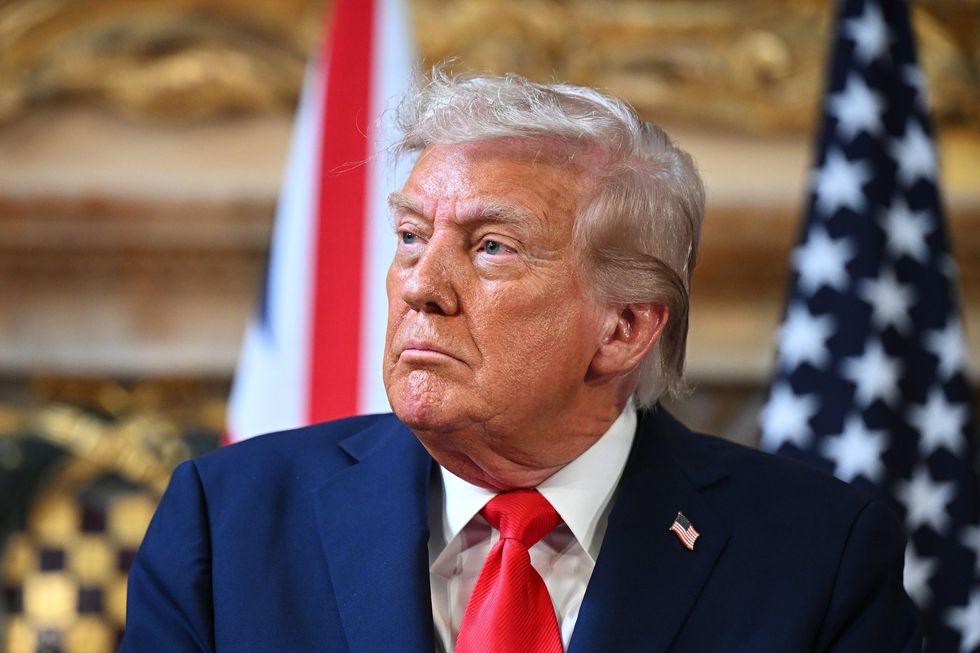
'Let the oil flow!' Donald Trump declared
|PA
The US will be represented by Vice President JD Vance, according to The New York Times.
The announcement, which fell on Mr Trump's 80th birthday, was announced after midnight in Tehran to avoid it coinciding with the occasion, also according to the US outlet.
The seven-and-a-half-hour time difference between the two countries has allowed both Tehran and Washington to hail their own version of events as to when the deal was finalised.
Mr Sharif extended gratitude to Qatar's leadership for their assistance in brokering the accord, whilst also highlighting the contributions made by Saudi Arabia and Turkey throughout the mediation process.
Mr Sharif said: "Following intensive talks, we are pleased to announce that the Peace Deal between the United States of America and Islamic Republic of Iran has been REACHED.
"Both sides have declared the immediate and permanent termination of military operations on all fronts, including in Lebanon."
LATEST DEVELOPMENTS:
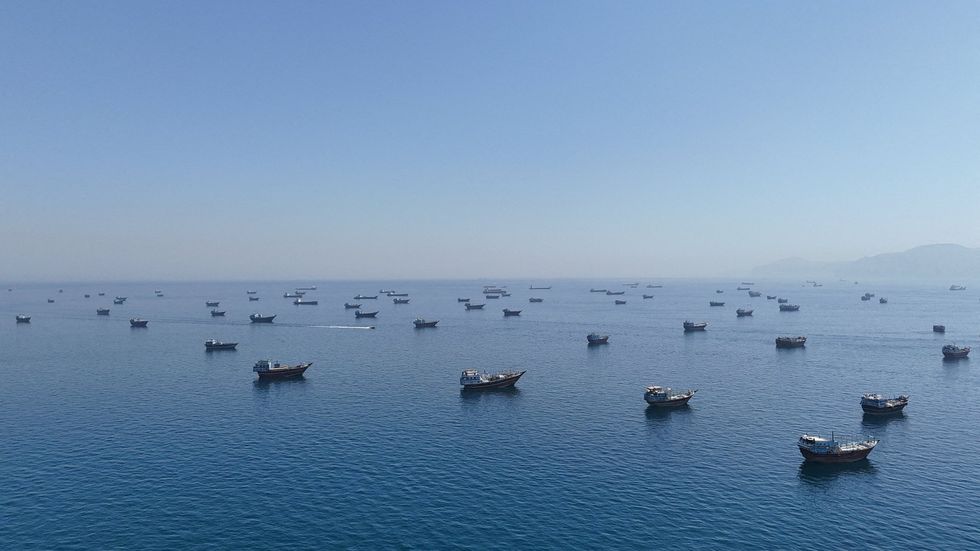
Hundreds of ships are waiting to make the Strait of Hormuz crossing
|REUTERS
He added: "We would like to thank the United States of America and the Islamic Republic of Iran for their commitment to finding a diplomatic solution to the conflict."
He went on to conclude: "With the agreement now in place, mediators will facilitate a series of meetings this week.
"These pre-implementation discussions will lay the foundation for the technical talks and the official signing ceremony."
Iran's Fars News agency said an official statement from the country's supreme national security council will be issued shortly regarding the ceasefire agreement with US.
According to the Iranian state broadcaster, marine traffic through the Gulf will be regulated by Iran in coordination with Oman.
Iran's Deputy Foreign Minister Majid Takht-Ravanchi said the immediate and permanent end to the war and military operations on various fronts, including Lebanon, will be announced starting tonight.
Mr Takht-Ravanchi went on to say the memorandum of understanding does not mean trust in the "enemy", adding that negotiations for a final deal will be held in a period of 60 days.
Further topics to be discussed in the two-month-long negotiations include the issue of Tehran's nuclear enrichment - the subject which kickstarted the war - ending sanctions, mechanisms for reconstructing Iran, and systems to monitor all participants' commitments, the Deputy Foreign Minister added.
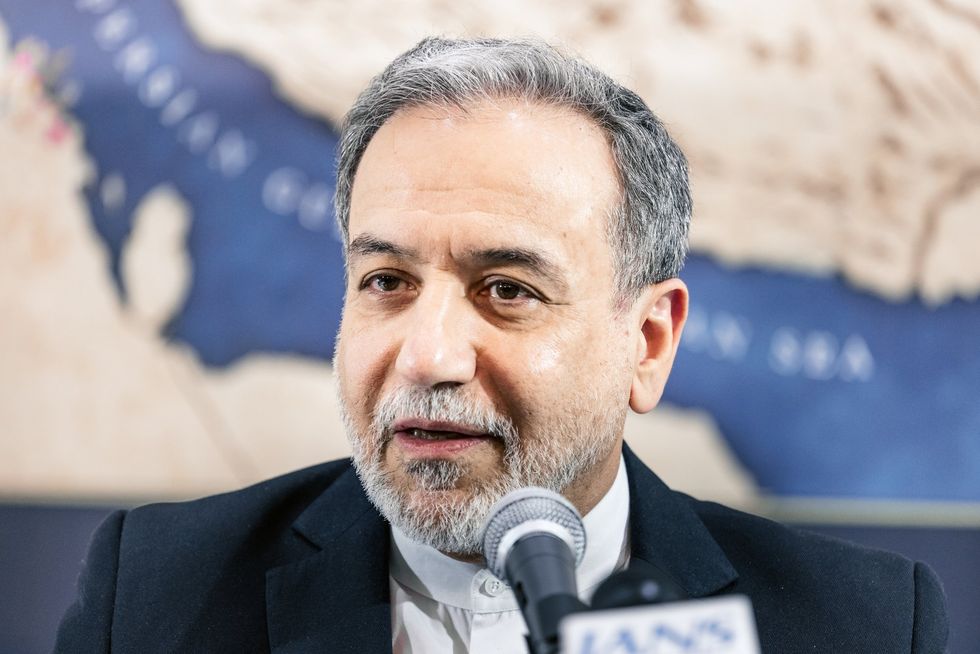
Tehran's Foreign Minister Abbas Araghchi is said to be one of Iran's representatives at the peace deal signing in Geneva on Friday
|GETTY
Prime Minister Sir Keir Starmer said he welcomed the agreement made between the US and Iran after he held a phone call with the President on Saturday.
Congratulating the President and mediators involved in the agreement, he said attention must be turned towards to "fully implementing" the MOU, including ensuring the Strait of Hormuz stays open, and making sure the "detailed elements of the nuclear agreement are finalised".
"It remains the UK's firm and longstanding position that Iran must never have a nuclear weapon," Sir Keir added.
And in a joint statement from leaders of the E4 - UK, France, Germany and Italy - sanctions on Tehran are prepared to be lifted in response to "clear, verifiable steps" by Iran on its nuclear programme.
Israel has yet to make a statement on the memorandum, but Mr Trump, in an interview with The New York Times immediately after the announcement, described Israeli Prime Minister Benjamin Netanyahu as "a very difficult guy", at the same time praising China's Xi Jinping and Russia's Vladimir Putin for aiding in the agreement.
"And to be honest with you, he should be very thankful to us for doing this. Because if Iran had a nuclear weapon, Israel wouldn’t be around for two hours." he said.
The President said if Iran failed to reach a nuclear agreement after the 60-day period, Washington could restart strikes on Tehran or make the US "the guardian of the Middle East" in exchange for 20 per cent of the region's revenues.
The MOU could end a war which has been raging since February 28 and had global repercussions.
The 107 days of war has resulted in the deaths of 13 US service members and drained the region's arsenal of missile interceptors.
The initial strike by Israeli and US forces on Tehran followed prolonged nuclear discussions between the White House and Tehran, held throughout February.
Almost immediately after the strikes, Iran closed the Strait of Hormuz, with movement between the passage reduced to a halt, with complete control of the waterway announced on March 4.
International oil prices spiked globally, with the strait responsible for the flow of a fifth of the world's oil flows.
The President has repeatedly said an agreement was close to being made throughout the duration of the war, with exact agreements over nuclear enrichment, regime change, and management of the strait disputed.
Last week, Mr Trump said the US would announce an agreement within two weeks, adding the US was getting "everything we wanted", including abandonment of Tehran's nuclear programme, from a deal with Iran.
Last month, the President had said he was not in a rush to make a deal over concerns Republicans could lose the elections in November, claiming he did not "care about the midterms".