










Taiwan is set to position American-made Himars missiles on two strategically located islands on mainland China's doorstep.
The high-mobility artillery weapons will be set down on the Penghu archipelago, situated off Taiwan's primary landmass, alongside Dongyin, the nation's most northerly territory - which lies fewer than 30 miles from Chinese shores.
According to a military source speaking to Liberty Times, the primary objective involves establishing a "dead zone" that would deter the Chinese People's Liberation Army from approaching.
Beijing claims sovereignty over Taiwan despite Taipei's objections, maintaining that military action remains an "option" on the table.
Positioning these systems on Penghu and Dongyin rather than the main island would "exponentially increase" their tactical effectiveness, the source explained, enabling strikes on Chinese military installations along its coast.
Doing this would mean Chinese forces could be forced to retreat at least 60 miles from the shoreline if higher-ups decided to invade Taiwan.
The source described the strategy as embodying an "offence is the best defence" philosophy.
Taiwan currently has more than 500 army tactical missile systems - known as ATACMS - with a striking distance of up to 185 miles.
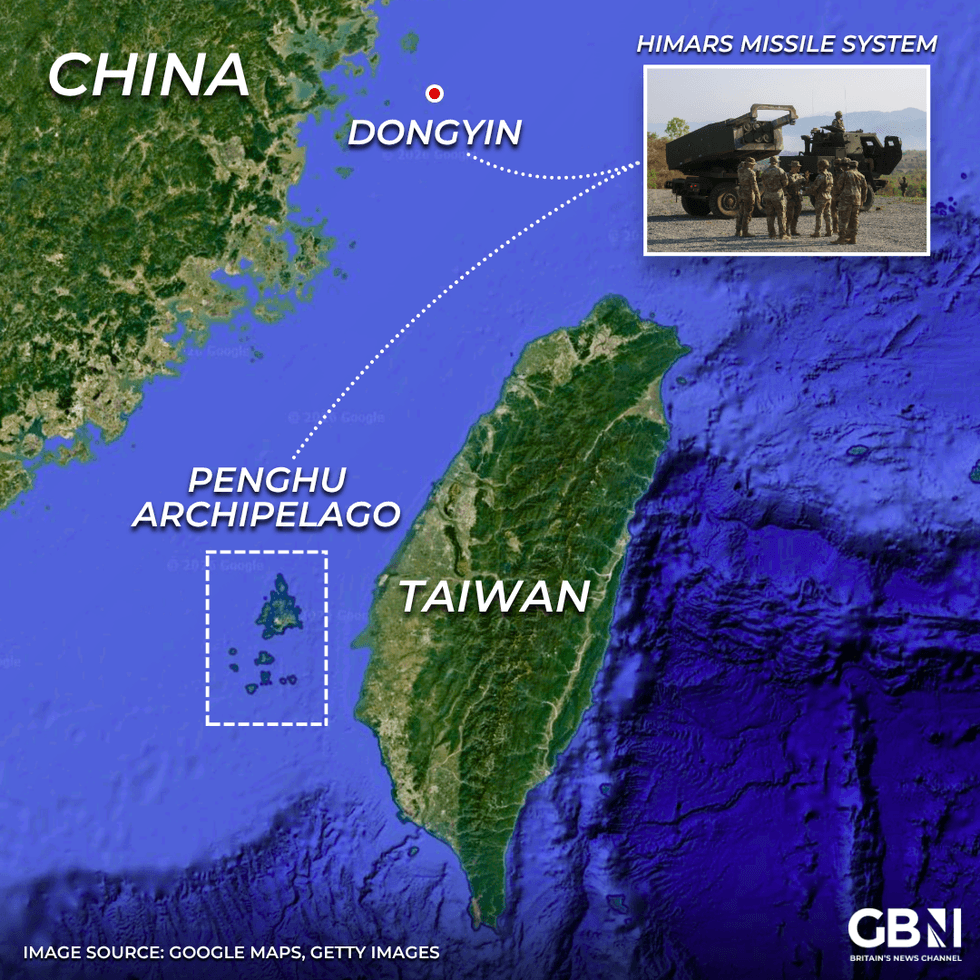
The high-mobility artillery weapons will be set down on the Penghu archipelago, situated off Taiwan's primary landmass, alongside Dongyin
|GB NEWS
When launched from Dongyin, these guided weapons could target crucial PLA Rocket Force and naval installations under the Eastern Theatre Command throughout Zhejiang and Fujian provinces.
The timing of this deployment carries particular significance, coming ahead of a scheduled summit between Chinese President Xi Jinping and US President Donald Trump.
Taiwan's defence capabilities are expected to feature prominently on the agenda when the two leaders meet.
Initial reports of the planned missile positioning emerged in January, coinciding with a three-day combat-readiness exercise conducted by Taiwan's defence ministry on Penghu.
TAIWAN FEARS - READ MORE:
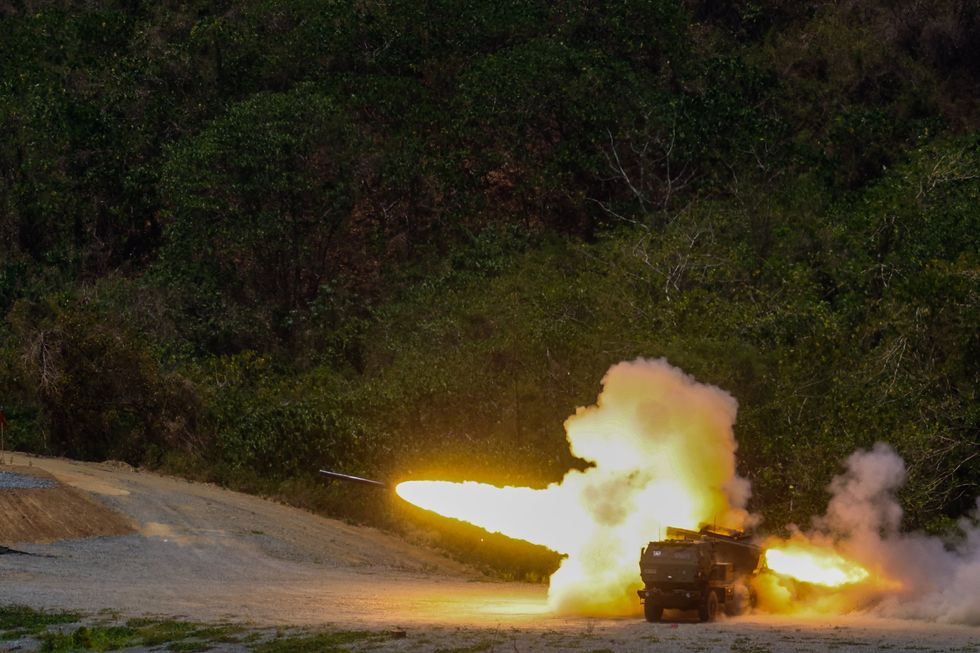
Taiwan said laying out the missiles would form part of an 'offence is the best defence' strategy
|GETTY
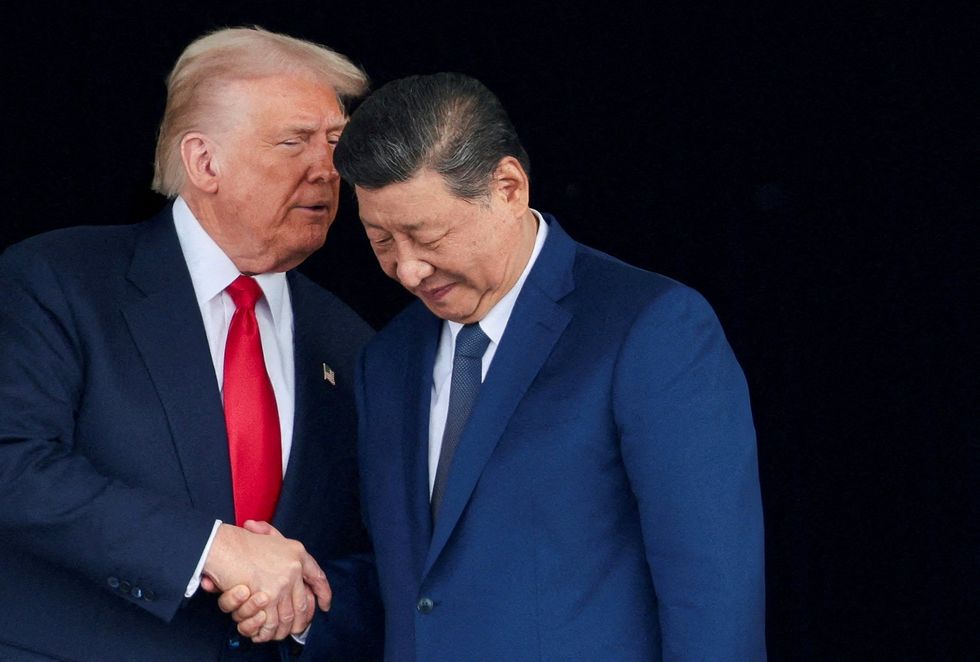
Donald Trump and Xi Jinping will meet again in China from May 13-15
| REUTERSThat drill involved firing tactical missiles from Himars units based on the main island.
Taiwan received its initial Himars delivery from Washington in 2024, with total shipments eventually reaching 111 systems once all consignments arrive.
Taiwan's legislature also approved a new special defence budget last week following months of delay.
The final allocation comes to some £18.8billion, a reduction of roughly one-third from President Lai Ching-te's original £29.3billion proposal.
It will partially fund a system, known as "Taiwan Dome" or "T-Dome", which will employ radar detection to track incoming projectiles and launch interceptor missiles.
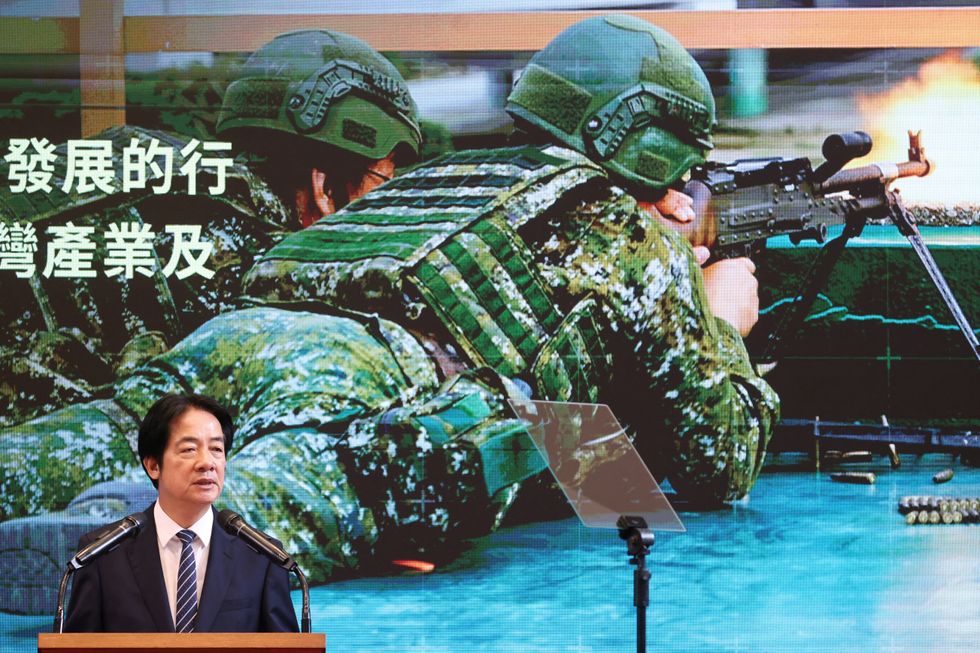
President Lai Ching-te revealed the huge defence splurge in November last year - though it has since been cut back
| GETTYThe island nation took inspiration from Ukrainian and Israeli tactics in developing the T-Dome - which have proved stubborn against much larger opponents.
Announcing it last year, President Lai warned that "China's threats to Taiwan and the Indo-Pacific region are escalating," citing military incursions, maritime grey zone operations and disinformation campaigns affecting Japan, the Philippines and the Taiwan Strait.
American officials have been left non-plussed by the diminished funding - and have repeatedly called for Taiwan to pass its original budget.
"Our position on Taiwan's defence budget... is that it was disappointing in that there was some stuff left on the cutting room floor that we believe still needs to be funded," an official told Reuters.
Beijing, meanwhile, has long sought to curtail American weapons sales to Taipe - and the reduced spending may partially help on that front.