







A month into the US/Iran ceasefire in the Middle East, and it’s beginning to look as if it’s on its last legs. Donald Trump has said that the temporary cessation of hostilities is “on massive life support”, adding that the present arrangement was “unbelievably weak”.
The outlook was much more optimistic when the first bilateral talks took place in Pakistan earlier last month, but things took a downward turn when those ended with no agreement. Since then, despite attempts to reopen negotiations, there has been an impasse.
The gap between the parties seems to be an un-crossable chasm. Latterly, the White House had issued a 14-point memorandum setting out its parameters for a permanent ceasefire.
Details have not been revealed, but informed speculation has it that it included Iran ceasing and desisting its nuclear programme, handing over its enriched uranium deposits, stopping all support for Iran’s proxy militias across the region, and opening the Strait of Hormuz to international shipping again.
Tehran has responded, but President Trump quickly deemed their counter-proposal as “totally unacceptable”, adding that it was “a piece of garbage” and that he “didn’t even finish reading it”.
According to the respected Washington DC- based Institute for the Study of War (ISW), Iran’s counterproposal calls for an end to the war, the “gradual opening of the Strait of Hormuz”, reparations to be paid for war damage, and the lifting of the United States’ naval blockade on Iranian ports. The United States and Iran would then conduct nuclear negotiations for 30 days.
Iran apparently also offered to dilute some of its highly enriched uranium stockpile and transfer the rest to a third country, stipulating that Tehran must receive guarantees that it would be able to retrieve its material if negotiations fail. It also offered to halt uranium enrichment for an unspecified time and refused to dismantle its nuclear facilities.
According to the ISW, this counter-proposal bears similarities to Iran’s previous proposals, in which Iran has sought to end the war and address the Strait of Hormuz issue before engaging in nuclear negotiations with the United States.
Trump has now stated Iran has been “playing games” with the USA and has been merely delaying negotiations, buying time to regroup and re-arm.
It also seems likely that Iran conducted attacks against a commercial vessel and some Gulf countries on May 10.
These attacks may be intended to sustain high oil prices and thereby impose economic pressure on the USA in order to compel the Americans to make concessions in any future negotiations.
The Iranians are probably attempting to coerce countries into lifting economic pressure on Tehran and allowing its oil exports to exit the Gulf of Oman.
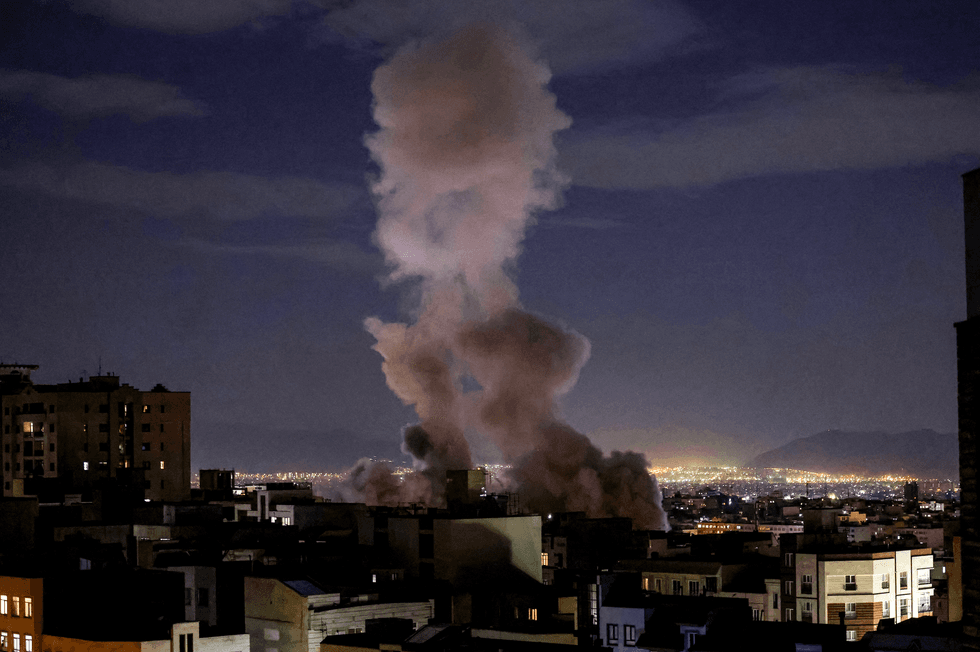
The world holds its breath as the Iran war throws up a series of nightmare choices
|Getty Images
So, where does that leave us? Well, it looks like a resumption of hostilities is likely in the immediate future, barring any unforeseen event or intervention satisfactory to all parties.
As I have written many times before, Trump has started a conflict which he appears unable to finish. Allies in the US efforts here have been few and far between, aside from the Gulf States immediately impacted, and those who have stepped up to the plate have proved timid in the extreme.
On the other hand, Israel, of course, wants to go in for the kill. Trump and his administration are now faced with a spectrum of options; one end sees him declaring victory anyway and walking away, the other sees escalation with a full-blooded application of military force to force open the Strait, seize Iran’s uranium stockpile, and possibly implement regime change in Iran.
There are a myriad of options in between these two extremes.
One thing is for sure: Trump will want to be clear of this morass of his own making as quickly as possible before domestic support turns fully against him. Which route will he choose to resolve the conundrum?
Our Standards: The GB News Editorial Charter