




Iran’s warning that it has “new cards to play on the battlefield” should not be mistaken for the unveiling of a secret weapon or a sudden shift in military capability.
It is, in essence, a message. A signal of escalation, certainly, but more importantly, a statement of intent.
Tehran is reminding its adversaries that it retains options, and that those options are designed less to win a conventional war than to reshape the environment in which any conflict unfolds.
To understand what that means in practice, it helps to look at how Iran has historically projected power. Unlike Western militaries, it has not relied on overwhelming force or technological superiority.
Instead, its strength lies in asymmetry: the ability to apply pressure indirectly, across multiple fronts, and often below the threshold that would trigger a full-scale response.
That approach has defined its strategy for decades, and there is little evidence to suggest it is about to change.
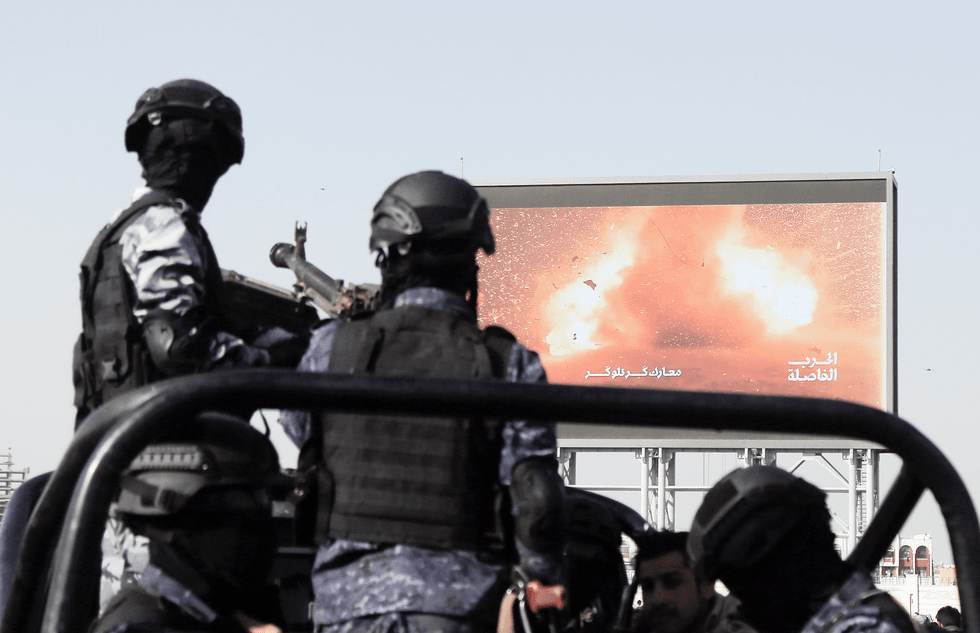
So when Iranian officials talk about “new cards”, the reality is likely far more familiar. We are looking at the potential intensification of missile and drone strikes, particularly against energy infrastructure and strategic assets in the Gulf.
There is also the continued harassment of commercial shipping, a tactic that has already proven effective in raising tensions.
Alongside this sits the activation, or reactivation, of proxy groups across the region — from Lebanon to Iraq and Yemen — each capable of creating localised crises that demand attention and resources.
None of these measures would be decisive in the traditional sense. They are not designed to deliver a clear military victory.
Instead, they are intended to complicate the picture, to stretch defensive responses, and to impose cumulative costs over time.
For Western economies, and particularly for countries dependent on stable energy supplies, that creates a persistent vulnerability.
 Iran’s 'new cards' are a warning — its real weapon could reshape the environment in which conflict unfolds |
 Getty Images
Yet there is a more subtle and arguably more powerful dynamic at play. Iran may not need to introduce anything genuinely new because it has already helped create conditions that work in its favour.
The situation in the Strait of Hormuz is a case in point.
This narrow passage is one of the most critical maritime choke points in the world, with a significant proportion of global oil and gas shipments passing through it every day.
Reports of partially mapped or unstable minefields in the area introduce a level of uncertainty that is uniquely disruptive. Even the suggestion of such hazards forces shipping companies, insurers, and governments to reassess risk. Routes may be delayed or altered, insurance premiums rise, and supply chains tighten. Crucially, this effect does not require constant escalation.
The uncertainty itself becomes the mechanism of influence. Markets, particularly energy markets, are highly sensitive to this kind of ambiguity.
Prices can move sharply not just on actual disruption, but on the perception of risk. In that sense, Iran’s leverage is not tied to a single weapon system or a one-off action.
It lies in its ability to sustain an environment where disruption is always possible, even if it is not always realised.
Seen this way, the most powerful “card” Iran holds may not be new at all. It is the enduring impact of a situation that remains unresolved and inherently unstable.
By allowing that instability to persist — and by signalling that it can escalate if needed — Tehran maintains a form of strategic pressure that is difficult to counter directly.
It is not about control in the conventional sense, but about shaping the conditions under which everyone else must operate.