










In 2004, the internet was changing daily life, and the online financial services space was a fertile ground for entrepreneurs looking to make their money.
Jason Tassie and his co-founders spotted a gap in the market for consumer price comparison websites at the time, and struck when the iron was hot.
Within 16 years, Mr Tassie grew Know Your Money and brought in £12million a year by 2020, before the business was acquired by US fintech giant, Nerdwallet, in 2020.
Speaking to GB News, the current CEO of Know Your Business revealed how he turned a company that began £6,000 in the red into a multi-million-pound venture that was sold to a Nasdaq-listed firm.

Mr Tassie spoke to GB News about his business success
|GETTY / JASON TASSIE
Ahead of his time, Know Your Money specialised in breaking down the options consumers had available to them in the financial service space, from loans to mortgages.
As the founder and CEO of Engage Media, Mr Tassie still works within the price comparison market thanks to his other going ventures, namely Know Your Business.
More than 20 years ago, venture capital was far less common a means of funding start-ups than it is now, which resulted in Mr Tassie taking drastic measures.
He shared: "When we looked at our options, the honest answer is that a credit card was just the easiest route. We utilized a zero per cent balance transfer for six months, deposited it as cash, and that £6,000 was enough to get us moving.
"Bootstrapping the company like that forced an intense level of focus. Every single penny counted, and it taught us some incredibly fast, sharp lessons in cash flow forecasting."
According to Mr Tassie, Know Your Money's early ambitions were rather simple and did not include a "sweeping master plan" to ensure growth.
He added: "The goal was simply to work for ourselves and secure a good salary. The moment I realised the risk had paid off wasn't the day we sold the company; it was much earlier, It was month we realised we could comfortably cover our own salaries while simultaneously funding our entire online ad spend."

Consumers regularly use price comparison websites, with the space being incredibly competitive for those who operate in it
|GETTY
LATEST DEVELOPMENTS
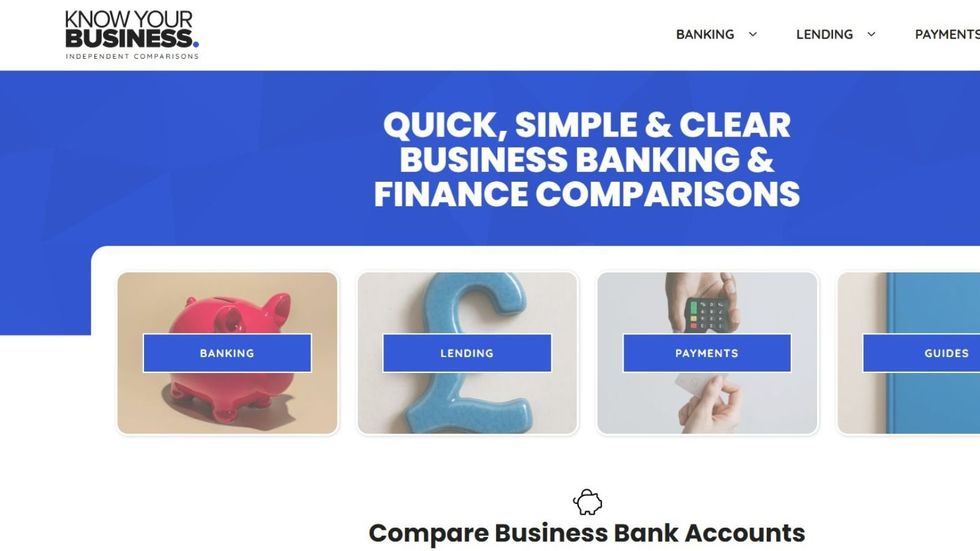
Mr Tassie has returned to the price comparison space with Know Your Business
|KNOW YOUR BUSINESS
The founder noted that the early days of the internet created an abundant supply of "accidental entrepreneurs", which led to him missing on potential opportunities that would now be on his "radar".
"While I do look back sometimes and wonder if we should have scaled quicker, the organic journey we took kept us extremely grounded. By bootstrapping, we retained the total freedom to build a culture we genuinely cared about.
"We employed people we knew, stayed incredibly agile, and built a flexible product without the looming pressure of aggressive growth targets dictated by external investors.
"Building a business that relies on actual revenue and profitability rather than constant cash injections forces you to be disciplined. Looking at the economic landscape today, where the hypergrowth model has left so many companies vulnerable, I am incredibly glad we built on deep, sustainable foundations."
Selling Know Your Business was a significant milestone for the businessman for two reasons: it made Mr Tassie a lot of money and it took place during the Covid-19 pandemic.
"We weren’t actively running around with a 'For Sale' sign; our heads were down, and we were entirely focused on scaling our product. But when you build a profitable, highly ranked independent comparison platform in a major market like the UK, people notice.
"Navigating an international corporate takeover through virtual screens during a global pandemic was an extraordinary exercise in trust. It forced both teams to be completely committed to overcoming the unique operational hurdles of a remote M&A process.

Know Your Business was sold to Nerdwallet
|GETTY
Despite it being nearly six years since the sale was finalised, Mr Tassie returned to the world of price comparison websites in 2025 with Know Your Business.
"After a short period, I realized there were distinct aspects of entrepreneurship that I deeply missed. Primarily, I missed being completely hands-on and close to the action. I also saw that while the consumer financial comparison space is highly mature," he shared.
On what he is doing differently in round two, the business person is doubling down on artificial intelligence (AI) to grow his business with technology and low headcount. But what would his advice be to start-up founders anxious to make their mark?
"In 2004, I wish someone had told me that running a business is a marathon, not a frantic 100-meter dash. Early on, it’s dangerously easy to tie your entire self-worth to the daily ups and downs of the numbers, which is a fast track to founder burnout.
"I also wish someone had told me that you simply cannot be 100 per cent across everything in your life simultaneously. During those intense years of growing the business, I was also getting married, raising three kids, and trying to keep up with friends and family."
Notably, Mr Tassie believes this advice is just as applicable as it was 20 years ago, with the rise of AI mirroring the digital age of the noughties.
He explained: "Today’s founders have tools we couldn’t have dreamed of in 2004. AI is an absolute game-changer on every level. We would have moved ten times quicker back then if we'd had it.
"My advice to any new startup today is to lean into these tools with everything you’ve got. With the current rate of technological change, legacy incumbents are incredibly vulnerable in almost every market. There has truly never been a better time to build."