






Bank of England Governor Andrew Bailey has warned the global economy is heading for a "very big energy shock" that could send inflation surging in the months ahead.
Speaking at the International Monetary Fund spring meeting in Washington DC, he said policymakers are facing a "very, very difficult" decision on interest rates as pressures build.
The warning comes as oil prices have surged by around 60 per cent this year amid escalating tensions in the Middle East, driving up fuel and energy costs.
However, in a sign of resilience, official figures released on Thursday showed the UK economy grew by 0.5 per cent in February, following a revised 0.1 per cent expansion in January.
The Bank of England governor highlighted the dramatic impact on crude prices, which have climbed approximately 60 per cent since January began.
At their peak, oil prices reached close to 120 US dollars per barrel, driving up costs for fuel and energy across the board.
The surge is anticipated to push broader prices higher, with UK inflation expected to rise sharply in coming months.
The Bank's Monetary Policy Committee convenes on April 30, where policymakers face what Mr Bailey described as a "very, very difficult" decision regarding interest rates.
Mr Bailey told the BBC: "There's really difficult judgments to be made."
However, the governor made clear that hasty action is not on the agenda.
"We're not going to rush to judgments on those things, because there are a lot of uncertainties around this, not just how it's going to play out, but also how it's going to pass through into the UK economy," he said.
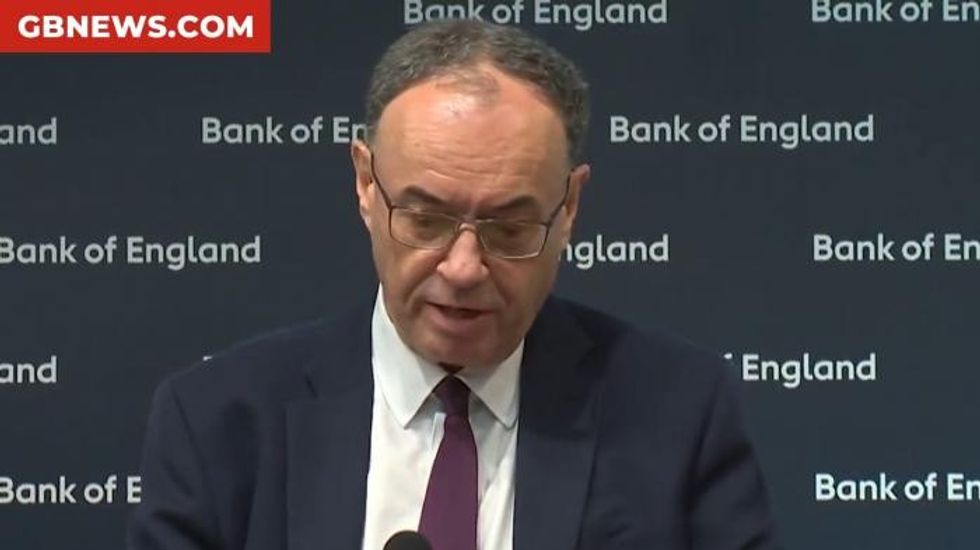
Andrew Bailey has issued a stark warning
| Bank of EnglandOfficial data released on Thursday painted a more optimistic picture of recent economic performance, revealing 0.5 per cent growth in February alongside an upwardly revised 0.1 per cen texpansion in January.
Despite this stronger-than-anticipated start to the year, analysts warn that economic activity will decelerate significantly as elevated energy costs constrain consumer spending and weigh on growth.
The IMF's latest economic outlook delivered a sobering assessment, with Britain receiving the steepest growth downgrade among G7 nations.
The organisation now projects UK growth of just 0.8 per cent for 2026, a substantial reduction from the 1.3 per cent it forecast in January.
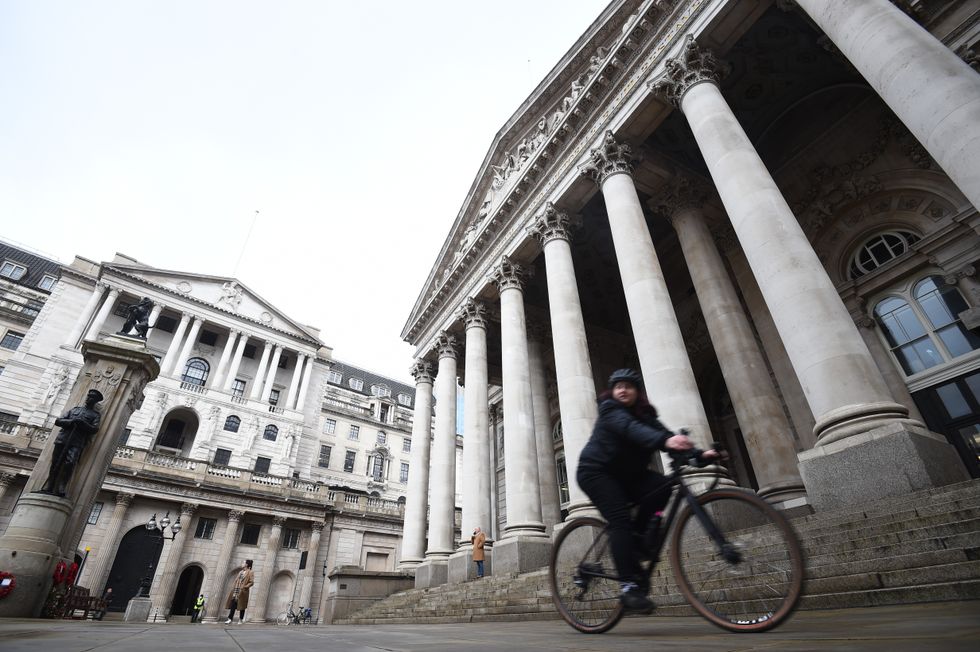
The energy price spike triggered by the war would drive UK inflation towards four per cent, double the Bank of England's target
| PAThe international body also predicted that the energy price spike triggered by the war would drive UK inflation towards four per cent, double the Bank of England's target.
Prior to the Iran conflict, markets had anticipated further rate reductions from the current 3.75 per cent level.
The IMF has urged central banks to avoid making precipitous decisions on rates, advice that Mr Bailey confirmed the Bank is heeding.
Concerns have mounted over potential supply disruptions stemming from the Iran war and the blockage of the strategically vital Strait of Hormuz shipping route.
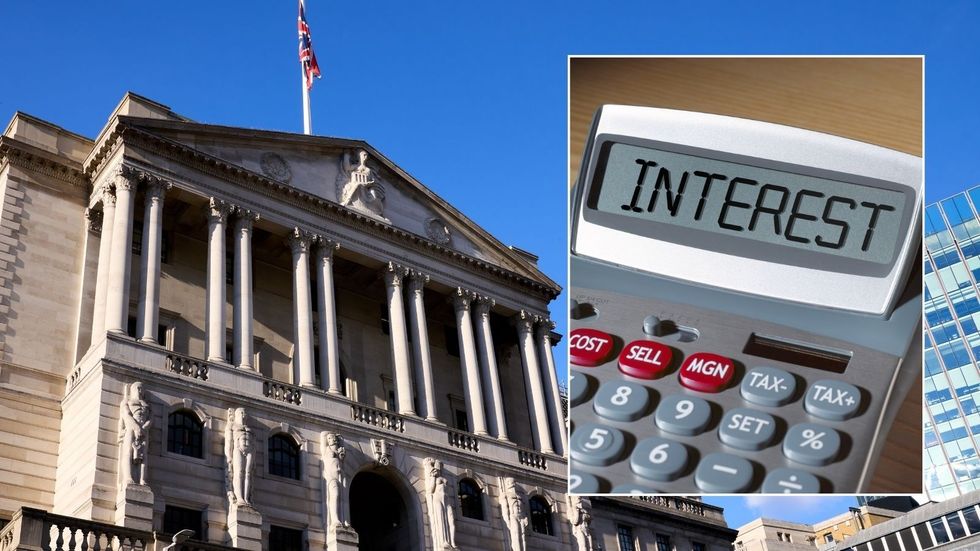
Prior to the Iran conflict, markets had anticipated further rate reductions from the current 3.75 per cent level
| GETTY/PAMr Bailey acknowledged there is "a certain amount of resilience in the system" but cautioned this buffer has its limits.
He added: "The faster there is a resolution to this situation I particularly mean in terms of the supply of energy coming out of the Gulf the easier and better the outcome will be. That's really critical at this moment."