





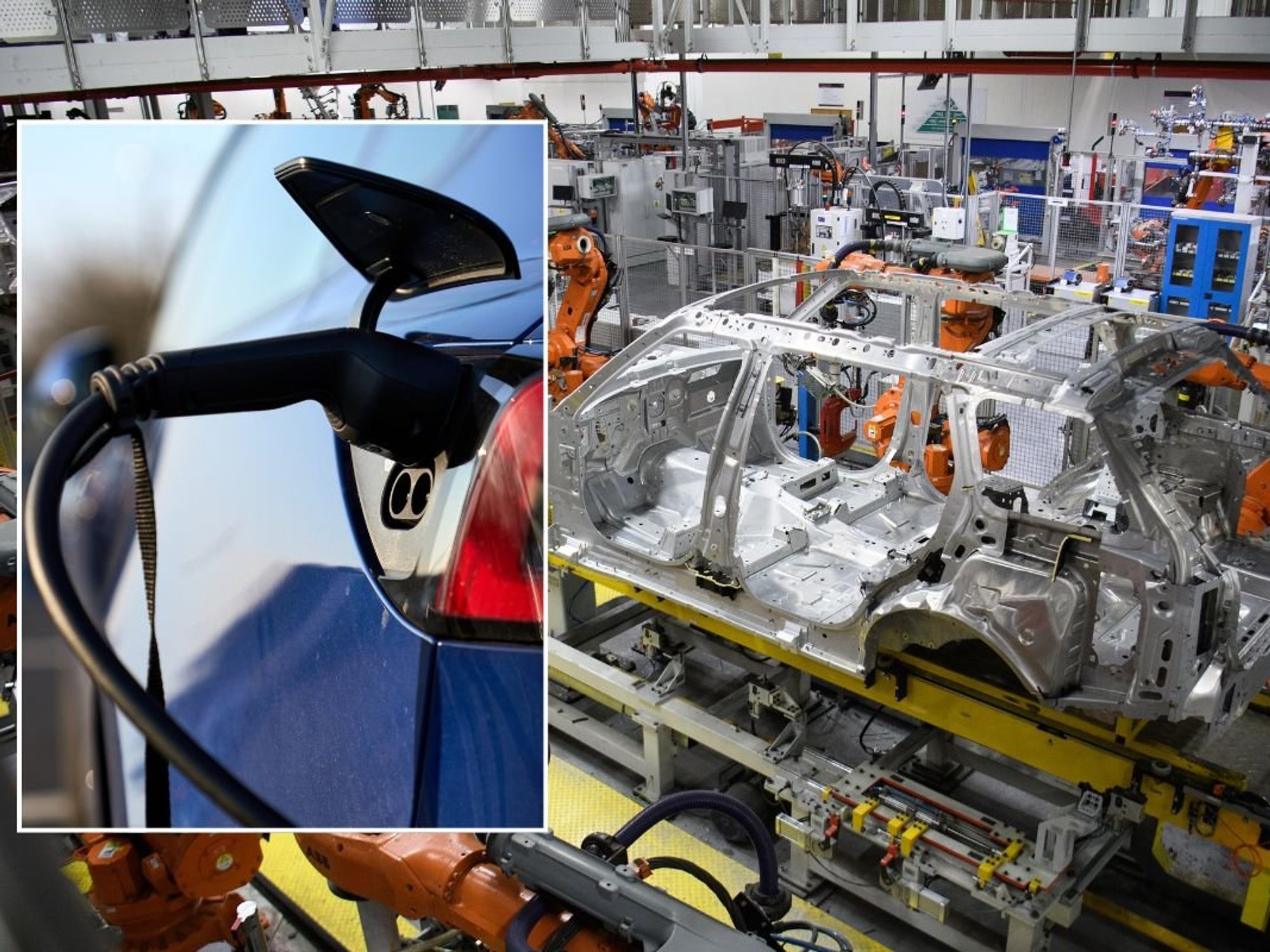




Britons have been warned of the growing dangers of electric scooters and bikes after a new report found that fire services tackle lithium-ion battery fires roughly every five hours.
New figures from insurer QBE Insurance found that the number of battery-related blazes has risen by 147 per cent in just three years, with fire services attending nearly 4.8 lithium-ion battery fires a day in 2025, compared with around two a day in 2022.
The insurer warned that people and businesses need to take greater care when charging, storing and disposing of lithium-ion batteries as the risk continues to grow.
Electric bikes were linked to the largest number of incidents, with fire crews dealing with 520 e-bike fires in 2025, compared with only 149 in 2022. E-bike blazes now make up around 30 per cent of all lithium-ion battery fires across the UK.
London recorded the highest number of incidents, with the London Fire Brigade attending 230 e-bike fires last year, accounting for almost half of the national total.
Overall, the brigade responded to 522 lithium-ion battery fires in 2025, marking nearly one-third of all such incidents nationwide.
Where details were available, converted or modified e-bikes were involved in more fires than factory-built models.
Electric car fires also increased sharply, rising from 120 in 2022 to 279 in 2025, an increase of 133 per cent. However, the rise comes as the number of electric vehicles on UK roads has also grown rapidly, with registrations increasing from around 664,000 to almost two million over the same period.
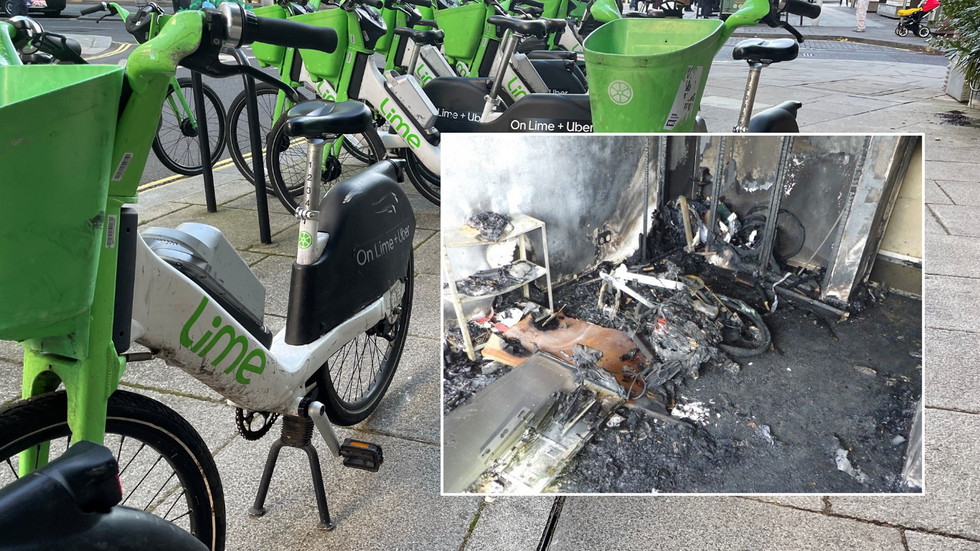
E-bike and e-scooter-related fires have been attended to every five hours
| PA/LONDON FIRE BRIGADEE-scooter fires jumped by 70 per cent, climbing from 107 incidents in 2022 to 182 last year, although almost half of all lithium-ion battery fires happened inside homes.
In total, 46 per cent occurred in residential properties, while 31 per cent happened outdoors, and 23 per cent were linked to commercial buildings.
Experts warned that the fires were caused by "thermal runaway", a dangerous chemical reaction that makes batteries overheat uncontrollably.
The problem can be triggered by damage, overcharging, or high temperatures, and can spread much faster than ordinary fires and are far harder for firefighters to extinguish.
LATEST DEVELOPMENTS
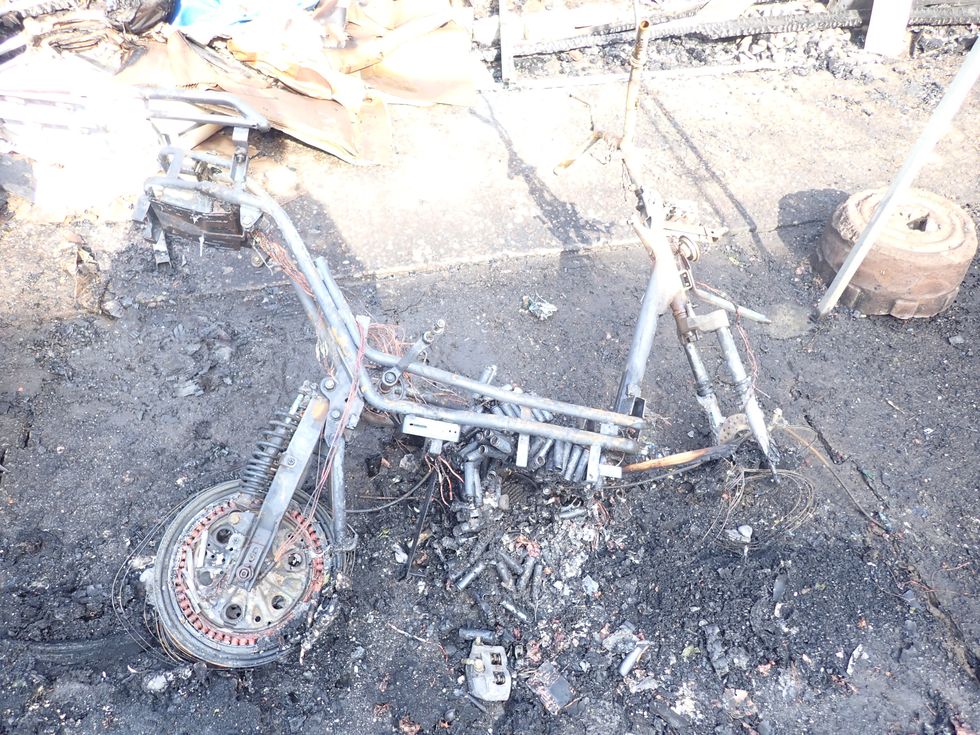 E-bikes are more likely to catch fire due to the lithium-ion batteries | LONDON FIRE BRIGADE
Adrian Simmonds, Risk Manager at QBE Insurance, said: "Lithium-ion battery fires continue to increase. It's vital that people and businesses take action to better manage this growing risk.
"Thermal runaway caused by these types of batteries burns differently, takes much longer to tackle and can require up to 10 times more water to contain."
Mr Simmonds urged people to follow basic safety advice when using battery-powered devices, adding that people should only use certified vehicles and batteries.
"The statistics suggest retrofitted bikes are more prone to these incidents, so we would encourage people to stick to reputable companies when purchasing and avoid unregulated devices," he said.
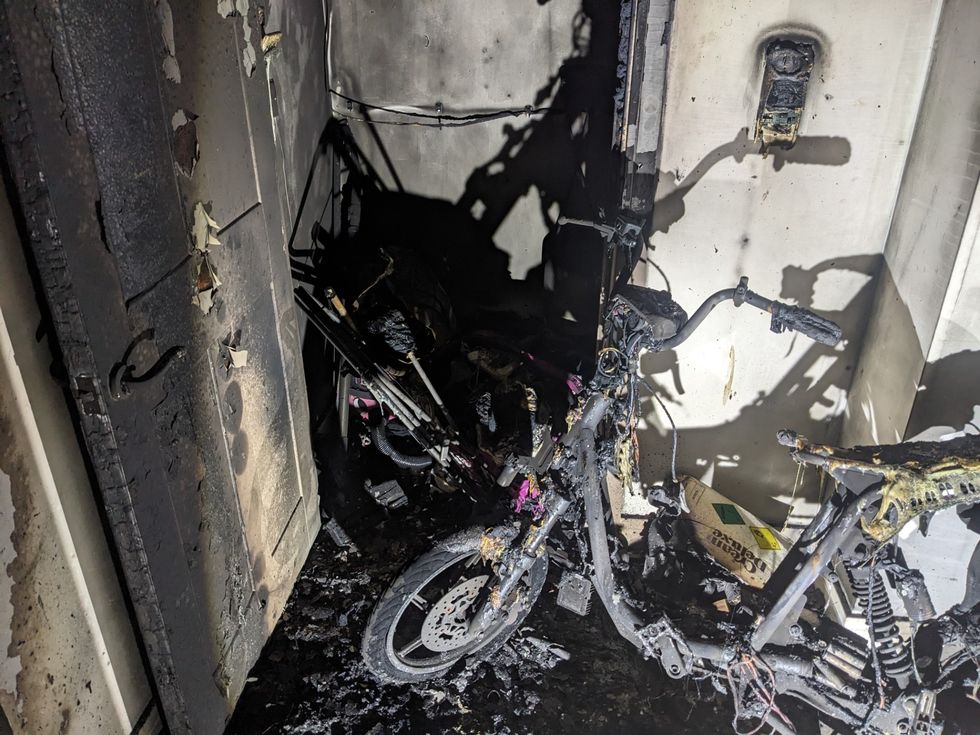 E-bikes and e-scooters have been blamed for causing a large number of fires | LONDON FIRE BRIGADE
 Outside London, West Yorkshire Fire and Rescue Service reported 126 lithium-ion battery fires in 2025, while Lancashire recorded 117 incidents.
Bedfordshire and Luton Fire and Rescue Service were the only brigade to report a fall in incidents year-on-year. The decline followed new e-bike and e-scooter safety guidance introduced in 2023.
To avoid potential fires, QBE has advised Britons to charge devices in well-ventilated spaces, use original chargers wherever possible, and never leave batteries charging overnight or unattended.