









The NHS has released corridor care statistics for the first time, exposing the scale of patients being treated in unsuitable hospital environments across England.
During May, emergency departments recorded a daily average of 2,241 cases where individuals received care in clinically inappropriate settings for periods exceeding 45 minutes.
Hospital wards saw an additional 699 daily instances of patients being treated outside designated bed spaces for the same duration.
Corridor care is defined as treatment occurring where essential provisions are lacking, including oxygen access, call bells, privacy, sustenance, toilet facilities, and conditions suitable for rest. The figures capture patient numbers at 8am each morning.
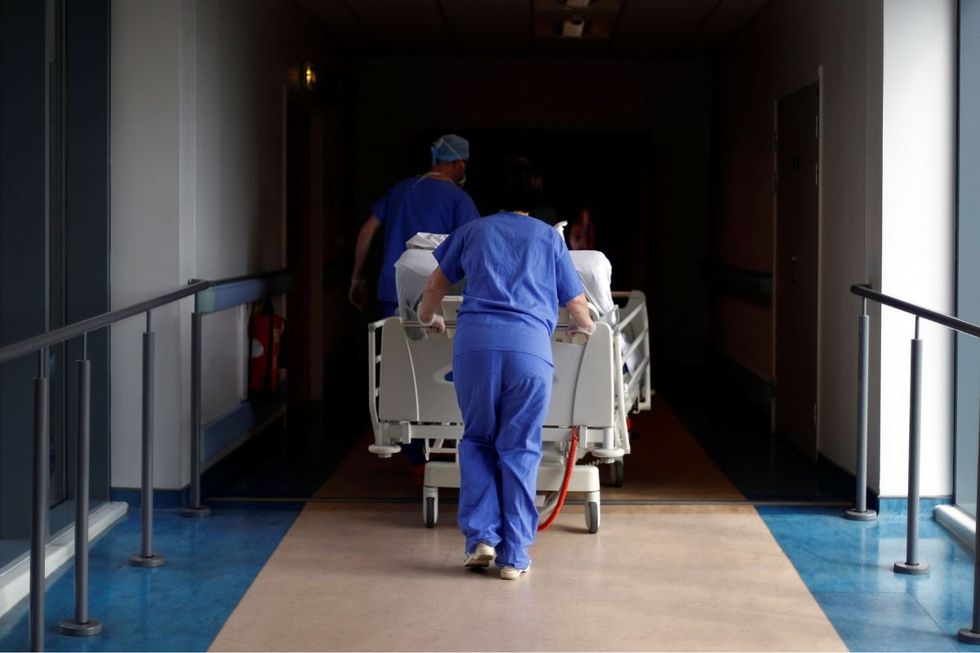
Corridor care is defined as treatment occurring where essential provisions are lacking
|GETTY
Accident and emergency performance continued its downward trajectory in May, with just 75.7 per cent of patients seen within four hours, falling short of the Government's 78 per cent target due to be achieved by March.
This represents a decline from April's 76.9 per cent figure. The number of patients enduring waits exceeding 12 hours from admission decision to actual admission climbed to 50,212 in May, compared with 47,750 the previous month.
LATEST DEVELOPMENTS
January saw a record 71,517 people facing such lengthy delays.
Those waiting four hours or more before admission also increased, reaching 128,590 last month from 122,616 in April.
The waiting list for routine hospital treatment expanded for the first time in half a year, reaching an estimated 7.22 million procedures awaiting completion by the end of April.
This figure relates to approximately 6.11 million patients, rising from 7.11 million treatments and 6.02 million patients recorded in March.
The growth effectively erases progress made during the previous month, returning the list to February's levels.
Nearly 100,000 individuals had been waiting more than twelve months for routine procedures by April's end, up from 94,406 in March.
The proportion of patients waiting beyond 52 weeks rose to 1.4 per cent, missing the Government's target of below one per cent.
Cancer diagnosis rates met the current benchmark in April, with 75.9 per cent of patients urgently referred for suspected cancer receiving a diagnosis or ruling within 28 days, exceeding the 75 per cent target despite dropping from March's 79.4 per cent.
However, treatment commencement proved more challenging.
Only 70 per cent of cancer patients began their first definitive treatment within 62 days of urgent referral, a decline from 72.8 per cent the previous month.

The waiting list for routine hospital treatment has expanded for the first time in half a year
| GETTYThis falls considerably short of the 75 per cent target the Government and NHS England had established for March 2026.
The proportion starting treatment within 18 weeks of referral stood at 65 per cent in April.
Our Standards: The GB News Editorial Charter